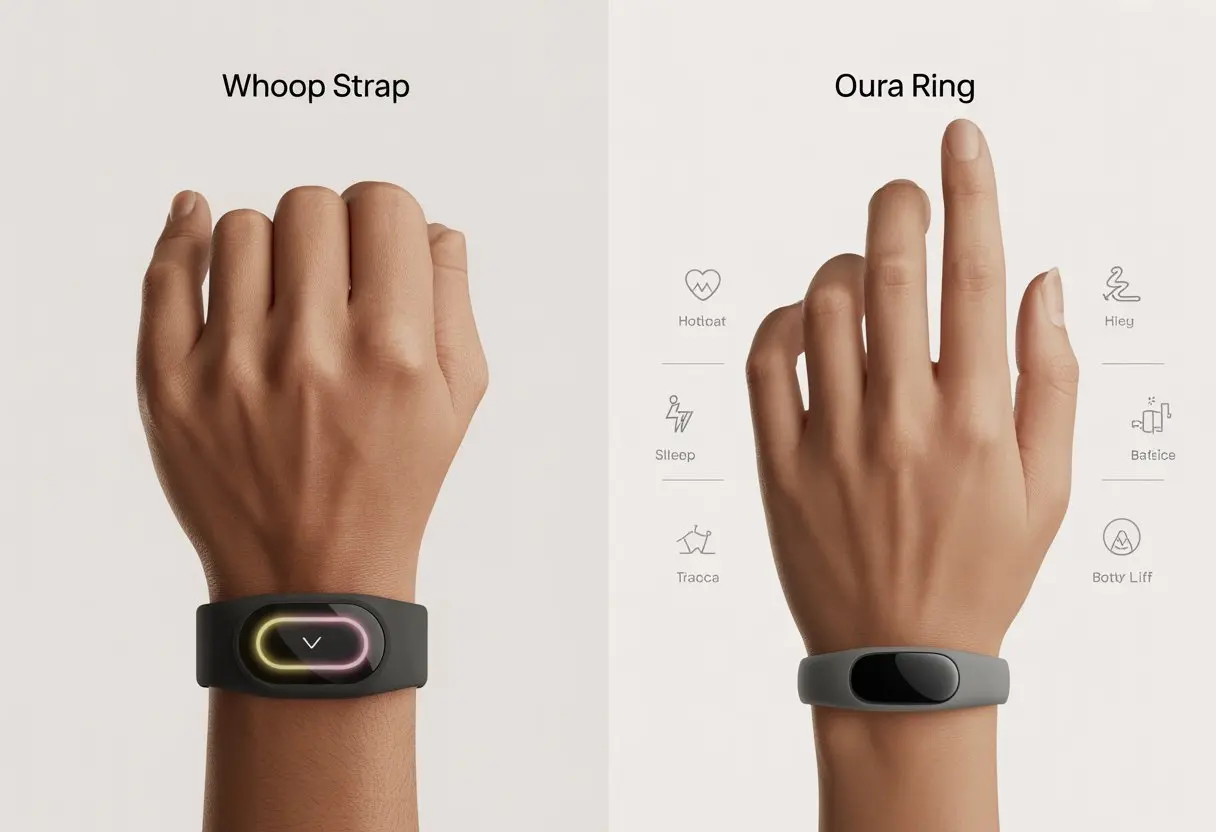
Ready to pick a side in the friendly wearables showdown between WHOOP and the Oura ring? Maybe you just want to know whether a wristband or a ring will help you sleep better, feel awesome, and impress your friends with all those recovery stats.
Both WHOOP and Oura ring track your sleep, recovery, and activity, but each offers unique features and feels totally different to wear.
If you’ve ever wondered if a ring can really keep up with your training or if a wristband can actually help you rest better, you’re not alone. The debate comes down to costs, convenience, and which gadget fits your daily life without making you look like a robot from the future.
For those who need real-time performance data or a comfortable tracking tool, it can help to check out direct comparisons like this WHOOP vs Oura review.
Don’t worry—no math required. By the end, you’ll know exactly which side to swipe your credit card for.
Design And Comfort
Trying to decide if you want to announce to the world that you track your sleep—or keep it a secret? WHOOP and Oura Ring show up very differently on your body.
Comfort, style, size, and even materials can make or break your wearable experience.
Aesthetics And Style
If you like bling, the Oura Ring has you covered. It looks just like a chunky wedding band, making it easy to pass off as a fashion statement—even if you’re really just low-key obsessed with your health stats.
You can pick from colors like silver, black, gold, and rose gold. It matches everything from workout leggings to fancy dinner attire.
Bonus: No flashing lights or screens.
On the other hand, the WHOOP band is much more of a “check out my fitness tracker” vibe. It straps on your wrist, looking a bit like a sleek watch with no face.
You can swap out bands and customize colors, but it always looks like a fitness device. If you enjoy conversations starting with “Oh, what’s that on your wrist?” you’ll like the attention.
With WHOOP Body, you even have the option to stuff the sensor into special clothes like bras, boxers, or yes—leggings. For folks who want to hide their tracking (or just hate jewelry), this is a clever twist.
But “underpants tech” does sound a little funny at brunch.
Sizing Kit And Fit
Let’s talk about the joys of getting a good fit. Oura Ring takes things seriously, sending you a free sizing kit before you buy.
You try out plastic sample rings for a few days. This helps you pick the right size before committing to the real thing.
No risky finger squishing involved.
WHOOP makes it simple—just choose the band length that fits your wrist, then adjust the strap at home. If you’re into WHOOP Body, fit also means making sure your leggings or sports bra have the right pocket for the sensor.
There’s less fuss here than with ring sizing, but more decision-making if you care about hiding it in your clothes.
Oura’s sizing kit is great if you’re picky about finger comfort or worried about swelling. WHOOP’s options keep your fingers free but do require a snug wrist fit.
Either way, neither device is likely to slip off and take a dunk in your soup.
Materials And Durability
Oura Ring is made from lightweight titanium and has a smooth, polished surface. This makes it tough enough for day-to-day living and even (lightly) banging your hand on doors.
It’s also water-resistant, so you can wash your hands or shower without worries. The finish holds up well, but heavy lifters might see small scratches over time.
WHOOP band’s core is a flat electronic “nugget” that slides into a fabric strap. The straps come in many types—plain, fancy, sporty—and can be swapped out in seconds.
WHOOP’s fabric is comfy, durable, and can handle sweat, swimming, and accidental wrist smacks on door frames. If you want maximum stealth and flexibility, WHOOP Body’s sensor pocket adds extra options, but only if you have the right gear.
If you have a tendency to lose jewelry or snack on them (hopefully not!), a wrist band is harder to misplace than a tiny ring. But if you’re more of a ring-wearer, Oura’s tough titanium has you sorted for daily life.
For more details, check out how each looks and feels in this head-to-head review.
Core Health And Fitness Features
When it comes to keeping tabs on your body, you want more than just shiny gadgets on your finger or wrist. You want real insights about your fitness, how hard you’re working, and if you’re burning off that third slice of pizza.
Activity Tracking Options
Both the WHOOP and Oura Ring are definitely not your average step-counting pedometers. They track way more than just how many times you sprint to the fridge.
With WHOOP, you get a dedicated fitness tracker that’s always on, logging all your movements, workouts, and rest. The WHOOP doesn’t have a screen—so you won’t get distracted by texts mid-burpee—but everything syncs to your phone.
Oura Ring, on the other hand, tries its best to fit a health lab onto your finger. It keeps track of activities like walking, running, and even meditation—because deep breathing counts as hard work too, right?
The Oura uses sensors to pick up on things like your heart rate and movement to guess when you’re working out, but it can miss some things if they’re not rhythmic.
If you like logging specific types of exercise, WHOOP makes it simple to track different exercises and see the results after each session. This lets you brag about your achievements, or realize maybe you need to hit the gym more.
Strain And Exertion Calculations
WHOOP is all about “strain.” No, not the kind you feel after leg day—this is a score from 0 to 21 that tells you how hard your body is working.
It measures your heart rate, HRV, and movement to get this number. The higher the strain, the more your fitness tracker thinks you’re channeling your inner superhero.
Oura takes a slightly more laid-back approach. It gives you an activity score that considers your movement, workouts, and even sleep.
Oura encourages you to keep things balanced, so if you crush a workout, it will remind you to recover too. Reviews say the Oura Ring is a bit gentler and focuses more on whether your activity tracker habits are healthy overall, not just how much you can push.
In side-by-side tests like those run by real users, WHOOP is usually favored for workout intensity details, while Oura provides more overall lifestyle feedback. It’s like WHOOP is your drill sergeant and Oura is your life coach.
Let’s talk steps and calories, because who doesn’t want credit for pacing around their living room?
Oura will happily give you your daily step count and estimate how many calories you burned.
This is great if you want to know if your “stroll to the mailbox” workout really paid off.
WHOOP, however, does not show your daily step count front and center. If you need to know how many steps you’ve taken, you’ll need to check elsewhere or convert your strain score in your imagination (not recommended if you value your sanity).
But WHOOP does track your calories burned during workouts and throughout the day, and is known for being quite detailed about calorie estimates tied to your workout intensity.
If counting steps is a ritual, Oura is your go-to. If you’re laser-focused on calories burned during “beast mode” moments, WHOOP is more your speed.
For more on how these trackers handle daily stats, check this analysis.
Sleep Tracking Capabilities
Sleep tracking is where both the Oura Ring and WHOOP try to impress you. Each device takes a slightly different approach.
The details might surprise you if you think sleep is just about closing your eyes and hoping for the best.
Sleep Score And Sleep Stages
Your Oura Ring wakes up every morning with a simple sleep score for you. It’s a number between 0-100, which is kind of like getting graded in sleep school—but less stressful and with no homework except “keep napping.”
The Oura app shows your score right away, breaking down things like total sleep, sleep efficiency, and the quality of your rest.
WHOOP does it a bit differently. Instead of a straight score, it serves up a sleep performance percentage.
So, if you hit 80%, you might just start giving yourself sleep pep talks. You can also track sleep in stages (light, deep, REM), and pretty much see all the data you never knew you wanted.
It’s easy to compare your nights when you have these numbers and not just a “yawn factor” to gauge your rest!
Deep Sleep, REM Sleep, And Sleep Performance
Oura Ring pays special attention to each part of your sleep cycle. You’ll see how much time you spent in deep sleep, REM, and those foggy light sleep stages.
The ring gives you a summary of when and how much you entered each phase. You’ll quickly learn if your 2 a.m. snack habit destroys your dreams—literally.
WHOOP, on the other hand, takes its sleep performance feedback seriously. According to a comparison with sleep lab tests, WHOOP edges out Oura for accuracy.
Who knew wearing a comfy band on your wrist could turn you into a sleep detective? You’ll get numbers for your deep, REM, and light sleep, along with advice on how to improve.
Plus, if you want to feel fancy, both trackers let you see your heart rate dips, nighttime movement, and a library’s worth of stats. If you’re itching to brag about your deep sleep minutes at brunch, either will do the job.
Recovery And Readiness Insights
Each tracker uses its own special sauce to tell you how fresh (or fried) your body feels. This matters if you want to know if you should push hard in your next workout—or just push snooze.
Recovery Score Versus Readiness Score
With WHOOP, you get a Recovery Score each morning. It’s a simple number that tells you how ready you are for training or if it’s a better day to just watch cat videos.
The score pulls from your heart rate variability, sleep, resting heart rate, and breathing. If your number’s low, maybe grab some coffee and chill. If it’s high, go wild in the gym.
Oura Ring, meanwhile, gives you a Readiness Score. It’s pretty similar but throws in extra factors like your previous activity level and body temperature.
Oura’s algorithm can be a bit unpredictable—it might suggest rest even if you just jogged after a pizza run.
Device
Main Metric
Key Influencers
WHOOP
Recovery Score
HRV, sleep, resting heart rate, respiratory rate
Oura
Readiness Score
HRV, sleep, activity, body temperature, previous recovery
Well-Being Metrics And Training Readiness
WHOOP’s kind of like your mom in disguise: it tells you when you’re wiped out, stressed, or just faking it. With strain and recovery scores, it keeps tabs on stress and gives advice for training loads.
Oura’s all about well-being. It checks your sleep quality, movement, temperature, and even how often you sneak out of bed for snacks. The app gives you color-coded advice about whether you should train, rest, or nap with your dog.
Oura’s a bit chattier—expect more notifications about your health trends and mood. Some folks say WHOOP is better for athletes, but Oura’s great if you want extra wellness nudges.
Heart Rate And Health Monitoring
Your heart’s more than a muscle—it’s the unofficial DJ of your life, setting the tempo for workouts and sleep. Paying attention to heart rate, accuracy, and variability can really change how you see your health.
Heart Rate Tracking And Accuracy
If you want to play “Guess My Pulse,” both WHOOP and Oura Ring are in the game, but with their own quirks. Oura hides its sensors on your finger, while WHOOP wraps your wrist like a tiny fitness hug.
WHOOP stands out for real-time heart rate monitoring. It tracks your heart rate all day and lets you check during workouts, giving you live updates. Handy if you like to see your heart rate spike during sprints or drop while you’re pretending to do yoga.
Oura Ring doesn’t do real-time reporting. It collects heart data in the background, then syncs results after you’re done. No live stats, but you’ll get a summary later—like a health report card you can’t ignore.
Both devices rate highly for accuracy. Oura uses multiple sensors on your finger, which gives precise readings, especially during sleep. WHOOP’s also accurate and shines if you want live updates during activity, as shown in this detailed comparison.
Heart Rate Variability And Resting Heart Rate
Heart Rate Variability (HRV) sounds fancy, but it’s just how much your heartbeat dances between beats. High HRV usually means you’re well-rested, while low HRV can mean stress or tiredness.
Oura Ring quietly tracks HRV overnight. Its sensors on your finger give you detailed nightly reports, so you can play sleep detective and figure out if your rest was actually restful.
The ring also shows your resting heart rate (RHR) trends, helping you spot if you’re getting fitter or just really good at napping.
WHOOP shows both HRV and RHR scores every morning. Its special twist is personalized recovery scores, so you know if you should go hard or just binge-watch nature docs.
WHOOP’s 24/7 heart rate monitoring gives you a full picture, not just a quick snapshot, as explained in this thorough guide.
So, whether you’re obsessed with numbers or just want the basics, both devices have you—and your heart—covered.
Additional Wellness Metrics
If you’re the type who wants every detail about your body, you’ll love how these trackers dig in. You’re not just getting a good night’s sleep—you’re getting a front-row seat to your body’s weirdest habits.
Blood Oxygen And Respiratory Rate
Feel out of breath after chasing your dog? Oura Ring and WHOOP both track your blood oxygen (SpO2) levels and respiratory rate while you sleep.
This isn’t just for bragging—it can help spot sleep apnea or hint when your body’s fighting off a cold.
WHOOP tracks your blood oxygen all night. You get a graph in the morning, which is almost as satisfying as checking your likes on social media.
Oura Ring tracks SpO2 too. It might overestimate your total sleep time a bit, but its numbers for oxygen and breath rate are usually solid. You get your respiratory rate served on a digital platter, so you can compare your stats week to week and feel like your own personal trainer—without the shouting.
Skin Temperature And Health Data
Let’s talk skin temp. Oura Ring turns your finger into a mini climate station, logging daily temperature changes. If your temp creeps up, maybe it’s time for a little extra hand-washing, or just a nap.
Oura uses this data for insights about periods, ovulation, and possible illness.
WHOOP also tracks skin temperature trends, but it’s a bit quieter about it. You won’t see a big dashboard, but you’ll get nudges if something’s off.
Both wearables throw in loads of other health data to obsess over. You’ll get heart rate, resting heart rate, HRV, and even readiness scores. If you love totals and trends, there’s a chart for almost everything. For more on these features, check out this detailed breakdown of Oura and WHOOP.
Ease Of Use And User Experience
If a wearable’s too hard to use, it’ll end up next to your old fidget spinner. WHOOP and Oura Ring both try to make things easy, but they have different ideas about how. Meditation and mindfulness features? That’s another story.
App Experience And Data Presentation
The Oura Ring app feels like a friendly tour guide for your sleep and health data. It shows your readiness, activity, and sleep scores in clear charts and fun circles.
You can see your stats at a glance, with colors and hints that even your grandma could read. Tap one, and you’ll get more details—without getting lost in a maze.
The WHOOP app? It’ll make you feel like a lab scientist. The dashboard dives deep, showing strain, recovery, and sleep with graphs and numbers. WHOOP loves data, and it gives you plenty of options to dig in. It’s perfect if you want charts for your charts.
Ease of use rating:
Tracker
App Simplicity
Detail Level
Learning Curve
Oura Ring
Easy
Moderate
Low
WHOOP
Moderate
High
Medium
For a simple, friendly experience, Oura Ring has the edge. For deep dives, WHOOP takes the prize—see this in-depth review.
Meditation Support And Guidance
Oura Ring has a meditation timer called “Moment” that helps you log meditation or breathing sessions. It gives gentle reminders and tracks your calm moments—so you can brag about your Zen streak.
Oura even lets you tag moments, like “I meditated at lunch” or “Oops, I dozed off.” It nudges you to make time for mindfulness, and every minute is counted.
WHOOP’s pretty flat for meditation. No built-in timer or special mode for deep-breathing. You can tag activities, but there’s no meditation stats or feedback.
If mindfulness is your thing, Oura’s definitely the more useful buddy, at least according to real user experiences.
If you want detailed meditation support and reminders to breathe, Oura’s your pick. WHOOP’s more like that gym coach who only cares about your sprint time.
Battery Life And Charging
Nobody wants a tracker that dies halfway through a workout. Battery life and charging convenience matter, especially if you track sleep, workouts, and everything else.
Charging Methods And Accessories
If you’re tired of digging for weird charging cables, you’ll notice the difference here. WHOOP uses a slide-on wireless battery pack that charges while it’s on your wrist.
You don’t have to take the band off, which is perfect if you think removing fitness gear is surrender.
Oura Ring charges on a little dock, so you’ll need to pop it off for a bit. The charger connects via USB-C, which is nice if you lose cables (and let’s be honest, you will). Oura’s dock is small and simple, but don’t lose it—your phone cable won’t save you.
WHOOP’s charger goes with you. Oura’s needs a quick pit stop. Both are simple, but your habits might decide which style works.
Battery Performance Comparison
You want stamina, not constant charging. Oura Ring usually lasts 4 to 7 days on a charge, depending on how obsessed you are with checking stats. You can almost forget about charging all week, unless you’re living life on hard mode.
WHOOP’s battery lasts about 4 to 5 days before it needs juice. Since the charger slides on while you’re wearing it, you never really have to take WHOOP off—unless your fashion sense says otherwise.
Both have good battery life—long enough for sleep tracking and daily use. Oura might need less frequent attention. Decide if you care more about charging flexibility or sheer stamina. For more details, check out this side-by-side battery comparison between WHOOP and Oura.
Subscription Model And Pricing
WHOOP and Oura Ring both track your health, but they take your money in different ways. You’ll want to know if you’re paying a monthly fee or just one lump sum up front—nobody likes surprise bills.
Value Considerations
WHOOP and Oura Ring want you to feel like you’re getting a fitness coach and sleep expert for the price of a streaming service.
WHOOP includes the band “free”—but don’t get too excited, since you’ll pay for that with a required membership. It’s $30 a month or $239 a year if you’re feeling committed. That gets you all tracking features, analysis, and insights. The catch? If you stop your subscription, the band turns into a fancy bracelet.
Oura Ring asks you to buy the ring first. After that, there’s an optional subscription—so you can skip ongoing payments, but you’ll lose out on insights and some data. Without the subscription, Oura shrinks down to the basics and your finger might look less powerful than you hoped.
With both, you’ll need to decide what’s important—detailed tracking or budget-friendliness.
Subscription Versus Upfront Cost
WHOOP’s pricing structure feels a bit like joining a gym that only lets you in if you pay the monthly fee. There’s no upfront cost for the strap, but you’re tied to a subscription—$30 per month, or less if you pay for a year at once.
Oura Ring takes a different approach. You buy the ring outright, which can run several hundred dollars, and there’s an optional subscription for about $6 per month.
If you skip the subscription, you still get basic data, but you’ll miss out on the full sleep score breakdown and those fancy graphs. WHOOP wants that ongoing fee to keep you in the club, while Oura asks for a bigger purchase up front and then lets you decide if you want to pay every month or just stick to the basics.
Comparison With Other Wearables
So, how do WHOOP and Oura Ring stack up against the competition? Let’s look at some key differences in tracking, style, and price.
Versus Apple Watch
Apple Watch is like that friend who’s always multitasking—texting, calling, tracking, pinging, and reminding you to breathe. Unlike Oura Ring and WHOOP, Apple Watch is a mini-computer for your wrist.
You can read texts, listen to music, use maps, and, yeah, look cool at the gym. But you’ll need to charge it daily, and sleep tracking isn’t exactly its strong suit.
WHOOP and Oura both beat Apple Watch when it comes to sleep metrics and 24/7 recovery tracking. Oura slips onto your finger, WHOOP hugs your wrist, and both just quietly collect your data.
Apple Watch, on the other hand, is tough to ignore—it buzzes, flashes, and begs for a charge when the battery dips. Oura and WHOOP skip the app stores and fancy screens. You’ll check your stats on your phone instead.
If you’re not into sending emails or checking the weather from your wrist, and you care more about deep health data, these dedicated trackers might suit you better.
Versus Fitbit And Other Fitness Trackers
Fitbit and similar trackers are the old-school crowd pleasers. They count steps, calories, and sometimes even your caffeine overload—okay, not really, but wouldn’t that be something?
Fitbit nails activity tracking, daily steps, basic heart rate, and boasts solid battery life. It tries its hand at sleep tracking but doesn’t dig as deep as WHOOP or Oura.
Fitbits have a classic band design and simple screens, making them easy to use. They’re great for folks who want the basics.
Other trackers, like Garmin or Yahoo, focus on GPS, exercise stats, and rugged sports features. They usually don’t dive into recovery, strain, or readiness the way WHOOP and Oura do.
Here’s a quick table to sum things up:
Feature
Fitbit & Others
Oura Ring
WHOOP
Steps
Yes
Yes
Yes
Sleep Insights
Basic
Advanced
Advanced
Activity Focus
Strong
Moderate
Strong
Battery Life
Long
Moderate
Long
If you just want to count steps while chasing your dog, Fitbit’s got you covered. But if you’re after deeper recovery and sleep stats, WHOOP or Oura are worth a look.
Whoop 4.0 And Oura Ring Special Features
You want shiny features? These fitness gadgets aren’t just about steps and sleep.
Each one brings something extra for folks who love biohacking or want the latest tech wizardry for their body.
Latest Updates And Innovations
Whoop 4.0 and Oura Ring both love to show off their latest tricks. Whoop 4.0 skips the screen—so don’t bother tapping—and focuses on pure sensors.
The battery lasts up to five days, and you can charge it while you wear it. No more sad, untracked naps.
Oura Ring packs its smarts into a tiny ring. You get step tracking (Whoop says, “Not my job!”), sleep insights, and readiness scores.
Oura’s app gets frequent updates, and the ring is water-resistant, so you can wear it in the pool or shower. If you want even more details, this breakdown covers important differences like battery life and device format.
Biohacking And Advanced Capabilities
If you’re into biohacking, both devices offer plenty of ways to tweak your habits. Whoop 4.0 tracks your strain, recovery, and sleep cycles.
It gives advice on when to rest, but it won’t nag you like your overzealous gym buddy. That’s a relief.
Oura Ring goes a bit further, packing in body temperature sensors, SpO2 readings, and resting heart rate tracking. Its sleep tracking is impressively accurate, so you’ll wake up ready to play sleep detective.
Oura also checks your skin temperature trends—sometimes it’ll spot illness before you even realize you’re getting sick. That’s a neat trick, right?
Some folks say Oura’s reports are easier to dig into if you really care about deep data. The community often claims its data feels more accurate and useful, especially for tracking sleep.
Hi, my name is Garrett Jones, and I am a tech enthusiast. I enjoy researching the new tech that has been released, and have a vast knowledge of the best tech to purchase.
From a young age, I have always had a big interest in technology, and this blog is an extension of that interest. Through this blog, I hope to provide others with all of the information they need regarding tech options to consider, and things such as compatibility. Some of the different items I will be discussing include headphones, smartwatches, and how to fix common issues.