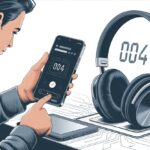
We’ve all been there—just about to chill with a playlist, and instead of sweet tunes, our Bluetooth headphones flash error code 104. Awkward silence.
Here’s the thing: most Bluetooth error 104 moments just mean the headphones can’t connect to your device, and you can usually fix it with a few quick steps. So, before you consider hurling your headphones out the window, let’s see if we can save the day with some easy fixes.

Sometimes, it’s as simple as moving your phone closer or toggling Bluetooth off and on. Other times, your stubborn gadgets need a reset, or you have to “forget” and re-pair—kind of like how we forget and relearn people’s birthdays.
If you’re getting service errors or your connection keeps dropping, don’t worry. Plenty of folks have run into this and gotten things working again.
Let’s laugh at our luck, roll up our sleeves, and wrangle error 104 together.
What Is Bluetooth Headphones Error Code 104?
Error code 104 acts like a stop sign for your Bluetooth headphones. Usually, it means something’s wrong with the connection, and your headphones can’t talk to your phone or computer.
Knowing what triggers this and spotting the warning signs can save you a lot of confusion—and maybe a little frustration.
Common Causes of Error Code 104
We run into error code 104 when Bluetooth just can’t make a solid connection. Your phone’s Bluetooth might be off (hey, it happens to the best of us).
Other times, the headphones are too far away, or something is blocking the signal. Maybe the headphones are still paired to another device and ignoring your main one.
A software glitch or outdated firmware can also trip up the connection. According to some forums, keeping devices close and making sure they’re really connected can help dodge this issue.
Symptoms and Warning Signs
Here’s how you know error code 104 is about to crash your Bluetooth party:
- You try to connect, but your headphones don’t show up or instantly disconnect.
- A weird error message pops up, usually with 104 glaring at you like a disappointed parent.
Sometimes, the settings say you’re connected, but there’s no sound—just silence and maybe a sigh.
Your phone or computer might act like your Bluetooth device doesn’t exist at all.
If you spot these signs, you’re probably facing error code 104. Trust us, everyone with Bluetooth gadgets has met this error at least once.
Step-By-Step Troubleshooting Guide
Let’s actually fix this thing. Forget the frantic Google searches—here’s a checklist for everything from stubborn power buttons to sneaky pairing problems.
Restarting Your Bluetooth Headphones
Let’s start with the classic: turn it off and back on. It’s basic, but sometimes Bluetooth errors just need a reset.
Hold the power button until the lights go off, then turn them on again.
If your headphones have a special restart sequence, check the manual (if you haven’t tossed it already). If that doesn’t work, restart your Bluetooth device—your phone or laptop.
Give it 10 seconds before powering everything up again. That lets the electronics really clear out.
Try pairing again. Sometimes all you need is a little patience and a well-timed button press.
Checking Battery Life and Power
Bluetooth headphones get cranky when the battery’s low. Error 104 might just mean you’re almost out of juice.
Check the battery indicator. Lots of headphones play a warning sound or flash red when they’re running low.
Plug them in for at least 20 minutes, just in case. Using them while charging can make connection problems worse, so let’s wait until they’re topped up.
If you still can’t connect, check the battery on your Bluetooth device too. A phone at 3% can cause all sorts of weirdness.
Low battery = weird errors. Let’s not make it any easier for error codes to show up.
Ensuring Proper Pairing Mode
Pairing mode is where the Bluetooth magic happens—or doesn’t. If you don’t see flashing lights or hear a pairing beep, your headphones probably aren’t ready to connect.
Usually, you hold down a button for 5-10 seconds until a light starts blinking.
Check the manual or follow the manufacturer’s instructions if you’re not sure. If your device doesn’t find the headphones in a minute, pairing might time out and you’ll have to start over. Bluetooth devices are picky like that.
Turn off Bluetooth on any older device you’ve paired with. Only one pairing at a time keeps things simple.
If all else fails, delete old Bluetooth profiles from both devices and start fresh. Sometimes a clean slate is all you need.
Solving Error Code 104 on Different Devices
Bluetooth likes to mess with us on any device. Error code 104 doesn’t care if you’re on a computer or glued to your phone.
Let’s break down how to fix it, wherever it pops up.
Fixing on Windows 8 and Virtual Machines
If error code 104 shows up on Windows 8 or in a virtual machine (because life wasn’t complicated enough), start with the Device Manager. Check for Bluetooth drivers that are out of date or missing.
Updating or reinstalling drivers often solves the problem. There are some handy guides if you need a walkthrough.
Virtual machines can be even trickier. Most VMs don’t play nice with real Bluetooth hardware, so you might need to enable USB passthrough for your Bluetooth adapter or just use the host device if nothing else works.
Sometimes, just giving your VM access to the right USB port does the trick.
Restart your computer, too. It sounds cliché, but honestly, it works more often than you’d think.
Addressing Issues on Mobile Devices
If error code 104 hits on your phone or tablet, don’t panic. Start by turning Bluetooth off and then back on.
If that’s a no-go, delete the device from your Bluetooth list and pair again. This clears up pairing confusion, which seems to happen a lot.
Check for software updates on your device—Bluetooth bugs get patched all the time.
If you’re still stuck, try a factory reset of the Bluetooth settings (not your whole phone—don’t worry). For device-specific instructions, check the support site or manual, but the steps are pretty similar on Android and iOS.
You’ll be back to your music and podcasts in no time, hopefully minus the drama.
Advanced Fixes for Persistent Problems
When Bluetooth headphones throw error code 104, it’s time to dig deeper. Sometimes, a sneaky setting or stubborn accessory is behind the chaos.
Let’s tackle these headaches with some practical steps and maybe a little patience.
Resetting Bluetooth Audio Settings
First up, let’s “reset” our Bluetooth audio settings. Most headphones have their own reset combos—often holding power and volume buttons for several seconds.
If that doesn’t work, reset things on your Windows device. Start by toggling Bluetooth off and on.
If it still acts up, go to Settings > Bluetooth & Devices, remove the headphones, and re-pair them. Windows has a built-in Bluetooth troubleshooter that can help if your device cache is acting up.
For stubborn issues or brand-specific steps, check out guides like this Bluetooth headphones fix walkthrough.
Checking Receiver and Master Volume
Sometimes, the real problem is hiding in plain sight: your master volume or a sneaky mute button in the system tray.
Check that both the receiver—USB dongle or built-in Bluetooth—and your system audio aren’t muted or set super low.
Play a test sound. If you hear nothing, open the sound settings (right-click the speaker in the taskbar and pick Open Sound settings).
Make sure your headphones are set as the output device. If you’re using a receiver, like an A/V setup or external sound card, double-check that everything’s plugged in and powered.
A quick look at all the knobs and buttons can save a lot of grief.
| Step | What to Check |
|---|---|
| System volume | Not muted/low |
| Output device | Correct headphones |
| Receiver connections | Plugged in & active |
Reconnecting USB and HDMI Accessories
Sometimes USB and HDMI accessories hijack your audio without warning. If your headphones share the stage with a USB audio interface or your TV is connected via HDMI, Windows might send the sound somewhere else.
Unplug any extra USB or HDMI accessories, then plug them back in one at a time. This resets the connection and helps your computer figure out who’s in charge.
After each reconnection, refresh the sound settings and choose your Bluetooth headphones as the output. If that doesn’t fix it, check for updated drivers for your USB and HDMI devices—especially after big Windows updates.
You’ll find more advice like this in the Bluetooth troubleshooting tips guide.
Examining Wireless Networks and Internet Connection
We don’t want error code 104 raining on our Bluetooth headphone parade. Sometimes, our Wi-Fi, routers, or even a fancy surround sound system can stir up problems and leave us in silence—or, honestly, force us to make small talk.
Testing Wi-Fi and Router Connections
Okay, first things first: let’s play detective with our Wi-Fi and router. Is the internet down for everyone, or just us? Try hopping online with another device. If that one connects while the glitchy one sulks, looks like the problem’s on the device side.
Restarting the router is a classic move for a reason. Sometimes, our network just needs a quick nap.
Still getting kicked off the internet every time we turn on Bluetooth headphones? Try updating those network adapter drivers through Device Manager. For step-by-step help, check out this helpful thread on fixing driver problems in Windows.
Here’s a quick checklist:
- Make sure all cables are plugged in—no loose ends.
- Reset the modem (off and on again, anyone?).
Double-check that we’re on the same Wi-Fi network as our router—not our neighbor’s “FBI Surveillance Van.”
Try a different browser or device to rule out browser drama.
If you want a deeper dive, this troubleshooting guide breaks it down even more.
Handling Interference From Surround Sound and Wireless Networks
If our living room looks like a sci-fi movie with wireless gadgets everywhere, chaos might be brewing for our Bluetooth headphones. Both surround sound systems and Wi-Fi networks can interfere with Bluetooth, especially if they all fight for the same 2.4 GHz airspace.
Bluetooth and Wi-Fi sometimes step on each other’s toes. Speakers, cordless phones, microwaves, and even baby monitors can make our headphones drop sound or ruin our streaming party.
To keep the peace, try these tips:
- Switch our router or Bluetooth headphones to different frequencies—moving Wi-Fi to 5 GHz works wonders.
- Place our Bluetooth device closer to the audio source, far from that humming subwoofer.
Limit the number of active wireless devices in the room (sorry, smart toaster).
These tweaks can help our headphones and internet get along—at least until the next tech mystery shows up.
Audio Specifications and Supported Formats
Before poking at settings, let’s get a grip on the technical stuff: sample rates, codecs, microphones, and those music formats we love. Bluetooth headphones juggle a lot behind the scenes. If they drop the ball, we get error 104 and a silent disco nobody wanted.
Sample Rate and Codec Compatibility
When we connect headphones, the sample rate acts like a traffic cop for sound quality. Most Bluetooth headphones prefer 44.1 kHz (classic CD quality), but some go for 48 kHz. Even our gadgets have preferences, apparently.
The codec is another picky character. Codecs like SBC, AAC, and aptX decide how our audio gets squeezed, shipped, and played. If our PC or phone forgets to invite the right codec, we may see greyed-out options or weird limits.
Sometimes, the audio format just sticks to “Tape Recorder” mode, and all our hi-fi dreams go splat. If format settings are stuck or missing, it could be a codec mismatch. Check out this guide about audio format issues with Bluetooth headphones.
| Common Codec | Sample Rate | Notes |
|---|---|---|
| SBC | 44.1/48kHz | Default, not fancy |
| AAC | 44.1kHz | Apple-friendly |
| aptX | 48kHz | Higher quality, less lag |
If things go sideways, check the device’s specs and keep drivers up to date.
Microphone and HFP Considerations
When we turn on the headphone’s mic, Bluetooth likes to switch to HFP (Hands-Free Profile). Suddenly, our crisp sound quality takes a nosedive. HFP supports only narrow audio bands, which tanks audio quality—like trading concert hall acoustics for a sock puppet show.
If error 104 pops up after enabling the mic, HFP might be fighting with the stereo audio driver. Try turning off the mic if we don’t need it. Not selecting it as the primary input device can bring back the full-range audio we want.
If Windows is stubborn, head to sound settings, find the device, and try toggling “Headphones” and “Headset” options. For more help, check out this guide on Bluetooth headsets and sound issues on Windows.
AAC, MP3, and Media Go Features
Let’s talk about AAC and MP3—our trusty music companions. Most Bluetooth headphones today support AAC for better sound, especially if we’re in the Apple ecosystem.
MP3 is less picky and still shows up everywhere—like that one friend who never leaves the group chat.
Media Go is Sony’s way to help us organize and move audio files, especially for older devices. If our headphones or software mention Media Go, it usually means there’s support for high-quality MP3 and AAC features.
Double-check what formats our headphones actually support (AAC or just MP3). If a tech manual or website says AAC but Windows acts oblivious, updating drivers or toggling enhancements might fix it. Here’s a troubleshooting article with more tips.
Exploring Software and System Conflicts
Bluetooth headphones can act like trouble-making pets—one minute they work, the next they throw a tantrum. A lot of error 104 problems come from clashing audio systems and sneaky gadget interference.
Pulseaudio and OSS Setup Tips
PulseAudio and OSS aren’t always good roommates. PulseAudio is the default sound server on many Linux distributions, but it can mess with older programs that still use OSS, the “grandpa” of audio systems.
When both try to grab the audio steering wheel, we get static, disconnects, or error 104. To dodge these fights, check that only one is running.
Open a terminal and run ps aux | grep pulse to see if PulseAudio is active. If we don’t use OSS-based programs, it’s safest to disable OSS modules. That way, PulseAudio gets full control and reduces clashes.
Sometimes, certain apps only play nice with OSS. In those cases, use a compatibility layer like padsp to keep the peace. If we mostly listen to Bluetooth headphones, keep PulseAudio updated and OSS tamed for a smoother ride.
Remote Control and NFC Interference
Remote controls are great—until they start acting like they run the show. Bluetooth headsets with built-in controls can clash with system-level remotes. When we try to change the volume, signals sometimes overlap and leave us with frozen headphones or no connection.
NFC can add a new twist to our Bluetooth drama. If our headphones or devices support NFC, they might try to pair or communicate at odd times. This confuses shy Bluetooth stacks, especially if two devices start talking at once.
To prevent this circus, limit the number of paired devices in Bluetooth settings. If our headset has NFC but we never use it, turn it off.
Keep the number of gadgets in the room low to lower the chance of confusion. Put remotes and NFC tags on timeout if things go haywire. Less interference means fewer unwanted error messages and more time to enjoy music instead of troubleshooting. For more info, check this Apple discussion on Bluetooth connection loss.
Security Precautions for Bluetooth Users
Keeping our Bluetooth headphones working is great, but staying safe while pairing devices is just as important. Viruses, sneaky downloads, or fake alerts can pop up when we least expect them. A careful approach helps us dodge big headaches later.
Scanning Files for Viruses
Before we get click-happy with any file transfer over Bluetooth, let’s remember not all files are friendly. Even if we trust the sender, malware can hitch a ride and mess with our devices if we’re not careful.
Let’s make a habit of scanning anything we download or receive with a trusted antivirus. If we’re dealing with a strange attachment or some “once-in-a-lifetime” coupon for free pizza, running a quick virus scan saves us from regret (and maybe a stomachache).
Almost every modern virus scanner offers an easy right-click “Scan with Antivirus” option.
Here’s a cringe-worthy scenario: We get so excited to open that new music file, we forget to check it. Suddenly “La Cucaracha” is blaring at max volume at 2 a.m., and our screen is flashing like a discotheque. Lesson: always scan first, jam later.
Using a Virus Scanner and Staying Safe
A dependable virus scanner is basically the digital guard dog for our gadgets. It watches for suspicious files, blocks fake updates, and barks (okay, not literally) when it smells trouble.
A few virus scanner tips:
- Keep the app updated, or it’s like sending a guard dog to work with a blindfold.
- Set up automatic scans so we don’t have to remember every time.
Ignore those annoying pop-ups telling us to turn off our antivirus. That’s like opening the front door for a raccoon with a mysterious bag.
Good virus scanners can detect threats in real-time. If something shady pops up while using Bluetooth, the app can stop it before it messes with our files or home screen. We can relax and focus on playlists instead of panic attacks.
Safe To Download? Home Screen Warnings
Ever spot a pop-up on our home screen promising “faster Bluetooth” or “free headphones upgrades”? Spoiler: That’s probably a scam.
If we see a warning or download prompt that doesn’t look right, stop and ask: Was I expecting this file? Do I really need a “Bluetooth booster” app from a random pop-up? The answer is almost always no.
When in doubt, check official app stores or websites for anything we truly want.
Red flag list:
- Weird icons after downloads.
- Messages yelling in ALL CAPS about “critical updates.”
- Home screen shortcuts we didn’t add.
Trust your gut (and maybe those antivirus alerts) before tapping “download.” Our home screen—and our sanity—will thank us.
When All Else Fails: Getting Customer Support
Sometimes, even our best troubleshooting skills can’t fix error code 104. That’s when it’s time to let the experts handle it—maybe with just a little pride lost.
Visiting the Customer Support Website
First, open the customer support website, hopefully with fewer error messages this time. Most brands have a clearly marked Support or Help Center link—usually hiding at the bottom of the homepage, as if it’s shy.
Here’s what to do:
- Search for “error code 104” in the website’s help bar.
- Check the FAQs section for quick answers. Sometimes, someone else has already run into our exact problem (and documented their pain).
Look for troubleshooting guides, step-by-step articles, or even short videos. We might find advice like keeping our phone nearby or making sure the Bluetooth driver is enabled—tips from user forums like this discussion about error -104.
Some support websites feature live chat with a real human or at least a friendly robot ready to answer questions.
If we’re really lucky, there’s a contact form so we don’t have to hunt for an email address.
Contacting Customer Support for Help
When the website just spins us in circles and leaves us frustrated, it’s probably time to reach out to customer support. Before we do, let’s pull together the basics: our headphone model, any error codes, the device we’re using, and what fixes we’ve already tried.
That way, we can avoid repeating ourselves over and over.
Here’s how we can get in touch:
- Phone: Sometimes, calling gets us answers fastest—if we don’t mind a little elevator music.
- Email: Perfect for sharing screenshots or, honestly, a long-winded rant.
- Live Chat: Quick responses, for better or worse.
- Social Media: Some companies respond to DMs, especially if we’re polite (or just tweet at them directly).
If we keep our details clear and stay patient, support can usually help us out. They might walk us through advanced fixes or even offer a replacement, depending on our warranty and maybe their mood that day.
The Razer Section: Insider Tips and Community Help
Joining the Razer community isn’t just about fixing tech headaches—it’s also a bit of fun. We can troubleshoot our Bluetooth headphones together, rack up badges, chat on the forums, or just see how many threads we’ve started (or, whoops, accidentally duplicated).
Razer ID and Forum Fun
To dive into Razer Insider, we’ll need a Razer ID. Signing up takes just a minute. We’ll need an email and a little patience for creating a password.
Once we’re in, our shiny Razer ID opens the door to all the forum discussions, events, and some exclusive goodies.
The forums are a mix of jokes, memes, and—if we’re lucky—actual solutions to error code 104. We can check out support threads about Bluetooth disconnect issues and see what other users and Razer Support have suggested.
Honestly, sometimes advice from fellow users just works better than the manual.
We can ask questions or vent when our headphones go wild with disconnects. No judgment—just help, tips, and honestly, more memes than we sometimes want to admit.
Creating New Threads and Earning Badges
If our problem seems so unique that even our grandparents would roll their eyes, we should create a new thread. Just hit “New Thread,” choose the right category (headphones, wireless, Bluetooth headaches), and explain the issue as best we can.
Being polite helps—a lot. Razer loves that.
Every post, reply, or helpful tip can earn us badges. These aren’t just silly stickers. They show we’re helpful, funny, or maybe just stubbornly confused (hey, that counts too).
There are badges for almost everything—starting threads, solving problems, or getting “Likes.” The more active we get, the more our badge collection grows. It’s kind of like Pokémon, but for tech support.
Checking our badges is easy from our profile. A badge-filled profile pretty much says: “We’ve seen things, we’ve fixed things, and we made it through Bluetooth error code 104.”
Miscellaneous Fixes, Fun Factories, and Easter Eggs
Sometimes we have to try something weird to get Bluetooth error code 104 to vanish. Other times, we play detective—digging up scripts, changing passwords, or pressing buttons nobody’s labeled yet.
Reset Your Password: The Desperate Move
We’ve all stared at error code 104 for way too long, losing hope and patience. When nothing else works, resetting our account password feels like a last-ditch effort.
But sometimes, that’s exactly what does the trick.
Here’s the thing: some Bluetooth profiles rely on credentials tied to our main account. If those get corrupted or out of sync (thanks, gremlins), a password reset can force everything to re-authenticate.
We log out, log back in, cross our fingers, and maybe—just maybe—our headphones reconnect.
Let’s make sure we save that new password somewhere safe. Sticky notes, password apps, or even scribbling it on our arm (and hoping we don’t shower too soon) can work in a pinch.
LUA Scripts to the Rescue
Sometimes, clicking random buttons just doesn’t cut it. When that happens, we might get a bit more technical.
LUA scripts come in handy here. They’re like mini-programs that let us change settings or run routines way faster than our fingers ever could.
LUA is a really flexible scripting language. You’ll usually see it in games or automation tools, but every now and then, it can help troubleshoot stubborn Bluetooth issues or those annoying pairing problems.
If we manage to find or write a custom LUA script, it can automate the whole tedious process of disconnecting, reconnecting, and messing with Bluetooth settings. Some advanced users even share these scripts on forums, so we can skip all those endless menus with just a click.
Honestly, we should always read any script before running it—no one wants to accidentally launch a rocket or something. With a decent LUA script and a bit of curiosity, we might just become audio troubleshooting legends.

From a young age, I have always had a big interest in technology, and this blog is an extension of that interest. Through this blog, I hope to provide others with all of the information they need regarding tech options to consider, and things such as compatibility. Some of the different items I will be discussing include headphones, smartwatches, and how to fix common issues.
- Bluetooth headphones error code 104 fix: How to Unleash Your Tunes and Your Sanity - October 5, 2026
- Why do my Bluetooth headphones not block outside sound? Sorry, They’re Not Mind Readers! - October 5, 2026
- How to Use a Smartwatch for Running Without Looking Like You’re Checking Your Stocks - October 4, 2026
Related Posts: