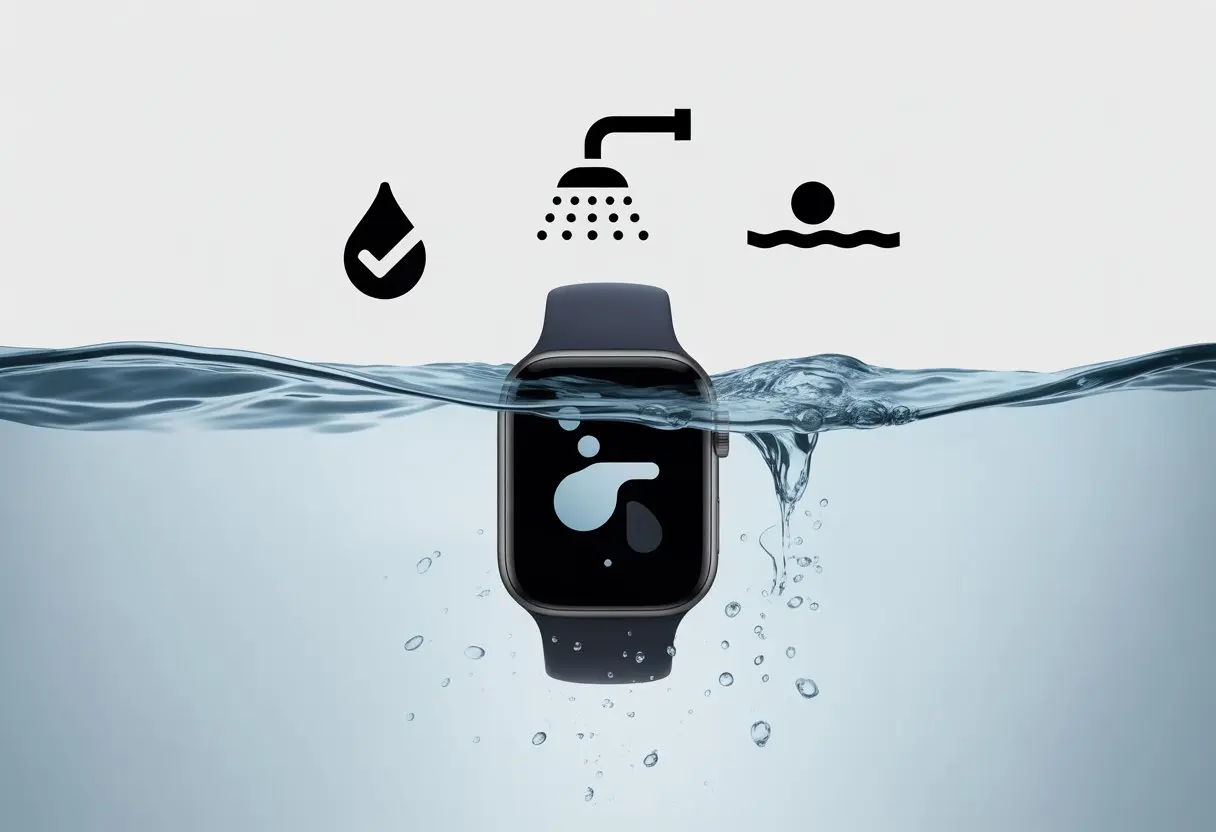
Water resistance ratings show how much water your watch can handle before it freaks out and stops working.
Is your smartwatch ready for a swim, a surprise rainstorm, or just some wild handwashing?
You might notice things like “IP68” or “5 ATM” stamped on the back of your new gadget.
Does that mean you can dive into the pool or just splash around in the sink? Spoiler: Not all ratings mean the same thing.
Your dream of texting underwater? Yeah, that might have to wait.
If you’ve ever wondered what those confusing codes and terms actually mean for your daily life, you’re in the right place.
Stick around—understanding water resistance can save you from heartbreak and soggy wrists.
Maybe it’ll even let you brag to your friends about the wild places your watch can survive.
What Is Water Resistance in Smartwatches?
If you’ve ever wondered whether your smartwatch can handle a rainstorm or a pool party, you’re definitely not alone.
Knowing the difference between similar-sounding watch names can save you a lot of soggy sadness.
How Water Resistance Works
Water resistance means your smartwatch won’t freak out at the first drop of water.
There are ratings like IPX7, IPX8, and IP68, which sound like robot names but actually tell you how much water protection your watch has.
IPX7: Survives getting dunked in up to 1 meter of water for 30 minutes.
IPX8: Handles more than 1 meter for longer than 30 minutes.
IP68: Protects against dust and continuous water exposure—rain, pool splashes, maybe your kid’s juice box disaster (read details).
Just remember, “water-resistant” doesn’t mean waterproof.
Your watch may giggle at a few drops but could still short-circuit if you go deep-sea diving.
Smartwatch vs. Smart Watches: Any Difference?
You might see “smartwatch” and “smart watches” used everywhere, like everyone’s in on a weird inside joke.
Here’s the not-so-secret: they mean the same thing.
A smartwatch is a wearable device that does more than tell time.
It tracks steps, buzzes your wrist when your phone is lost in your pocket, and tries not to drown.
Some people use “smart watches” as two words, but it’s not a different gadget.
No matter how you spell it, it’s your wrist’s little helper.
Just double-check the water resistance rating so you don’t end up with a flashy but very expensive paperweight.
Unpacking Water Resistance Ratings
You’ve probably seen a bunch of numbers and letters on smartwatches and wondered if you need to be a scientist to make sense of them.
Good news: you really don’t.
ATM Explained (No, Not the Cash Machine)
You keep hearing “ATM,” but this isn’t where you get money.
With water resistance, ATM stands for “atmospheres,” a way to measure how much pressure your watch can handle before it gives up.
1 ATM equals the pressure of water at 10 meters (33 feet) deep.
So, a watch rated 5 ATM can technically handle the pressure you’d find 50 meters (about 165 feet) under water.
But here’s the trick: these are pressure tests done in a lab, not a wild cannonball contest at your local pool.
Check the label before your next swim.
Most daily watches have somewhere between 3 ATM (splash resistant) and 10 ATM (suitable for swimming and snorkeling) according to guides like Tom’s Guide.
Leave the deep sea to the pros.
Meters and Feet: Depths of Bravery
Numbers like “50 meters” or “100 feet” look impressive, but don’t grab your scuba mask just yet.
These numbers come from test conditions, not your cannonball technique or wrist flailing while swimming.
Here’s a quick table to simplify:
Rating
Meters
Feet
Everyday Use
3 ATM
30 m
98 ft
Rain or hand washing
5 ATM
50 m
164 ft
Swimming, showering
10 ATM
100 m
328 ft
Snorkeling, not diving
High ratings mean better water protection—just don’t treat your watch like a submarine.
For long-term underwater use, even high ATM ratings have limits, as explained in guides such as this detailed article.
The Secrets of IP Ratings
Ever wonder what those random “IP” numbers on your smartwatch actually mean?
Here’s the truth behind these codes, explained without turning you into a rocket scientist—or even a regular scientist.
The IP Code and What It Actually Means
The “IP” in IP rating stands for “Ingress Protection.”
It’s not a secret society or a new dance move, but a way to show how well your device can block out dust and water.
Numbers follow the IP.
The first one is for solids, like dust or small crumbs (no, not pizza toppings).
The second is for water.
For example, an IP68 means your smartwatch isn’t scared of a dusty shelf or a quick dunk in water—but maybe not a swim in the deep sea.
Here’s a quick cheat sheet:
Digit
What It Protects Against
First
Solids (dust, dirt)
Second
Liquids (water)
A higher number means better resistance.
But don’t toss your smartwatch into the washing machine just yet.
Water resistance ratings on smartwatches look impressive until you’re faced with a rainstorm or cannonball into a pool.
Not all ratings handle every splash, so it’s important to know what to expect from your watch in daily and not-so-daily situations.
Water Exposure: Showers, Rain, and Accidental Splashes
Ever bumped your wrist on the kitchen faucet? Or got caught in a downpour on your way home? Most watches with ratings like 3ATM or IP68 will shrug off a bit of water from rain or hand washing.
These watches handle brief contact with fresh water—splashes, quick rinses, that sort of thing.
Showering, though, is tricky. Even if the rating looks pretty high, hot water and soap can mess with the seals over time. Plus, unless you’re hoping to smell like waterproof plastic, there’s really no reason to shower with your watch.
Here’s a quick breakdown:
Situation
3ATM / IP68 OK?
Notes
Hand Washing
Yes
Fine for short, fresh water exposure
Rain
Yes
No panic needed
Shower
Usually No
Heat and soap can ruin seals over time
Accidental Splash
Yes
Designed for these “uh-oh” moments
If your watch claims water resistance, it’s probably safe for daily life. Just don’t take it on a bathroom adventure tour.
Swimming, Snorkeling, and Scuba Diving: Where’s the Line?
You’d think a “50 meters” or “5ATM” rating means you can swim 50 meters underwater, right? Nope! That rating stands for brief dips at the pool surface, not deep-sea expeditions.
If you want to swim laps, look for watches with at least 5ATM (50 meters). These can handle surface swimming in fresh water, but most don’t love saltwater. Saltwater can cause slow damage if you aren’t careful.
Always rinse after beach days, or your watch might start to crunch like a potato chip.
Snorkeling is risky territory. Most basic water-resistant models aren’t made for long periods underwater or deeper dives.
And as for scuba diving? Forget it—unless you’ve got a proper diving watch. Basic smartwatches can’t handle the pressure, literally.
Play it safe:
Surface swimming: 5ATM is okay for pools.
Snorkeling: Only with higher-rated, specified watches.
Scuba diving: Grab a dedicated diving watch, not your daily step counter.
The Role of Design and Durability
Even the fanciest smartwatch won’t last long if water sneaks in or if it falls apart when you drop it. Good design keeps your device safe, and durability saves you from gadget heartbreak.
Construction Matters: How Smartwatches Keep Water Out
Smartwatch makers use tight gaskets, special adhesives, and sealed buttons to keep water outside where it belongs.
Some watches glue their screens on so tightly, you’d think they were hiding a secret treasure, not a circuit board.
You’ll usually see ratings like 5 ATM or IP68. These numbers aren’t just guesses; they tell you how much water your watch can handle before it gives up.
For example, a watch with 5 ATM water resistance can survive the pool, but it’s not ready for deep-sea diving.
When companies test water resistance, they put watches under pressure—literally. If your watch ever seems stressed, now you know why.
Next time you spot a raindrop on your screen, remember: smart design and sturdy construction have your back.
Water isn’t the only thing your smartwatch needs to dodge. Dust loves tiny openings just as much as water does.
A good watch has dust-tight seals to block out those sneaky little particles that want to crash your device’s party.
You might see an IP rating like IP6X. The “6” means it handles dust like a pro—nothing, not even a rogue grain of sand, gets through.
Besides stopping your smartwatch from turning into a sandcastle, this adds to its longevity. When dirt can’t get in, your watch lasts longer and works better.
It’s a win-win: your watch survives your beach adventures, and you avoid explaining to friends why your smartwatch sounds like a tiny maraca.
For more info about these dust and water ratings, Garmin shares definitions at Water Rating Definitions.
Water Resistance in Smartwatches vs. Smartphones
Ever wondered why you can shower with your smartwatch but panic if your phone gets a raindrop on it? You’re definitely not alone.
Both gadgets may say “water resistant,” but what that means is different for each device—and for good reason.
Waterproof Claims in Phones and Watches
Smartphones love to brag about being “waterproof,” but their claims are often more optimistic than your last New Year’s resolution.
Most modern smartphones, like those with an IP68 rating, can handle dust and short dunks in shallow water. But drop your phone in the pool for too long, and you might be reaching for a bag of rice.
Smartwatches want in on the fun too, but they usually go further. Many are designed for active use, so they can survive not just showers but swimming and sweaty workouts.
Their ratings often include terms like 5 ATM or even higher, letting you confidently take them for a quick swim or an accidental splash war at a summer BBQ.
For more details about what these ratings mean, check out this handy explainer on smartwatch water resistance.
Why Are Ratings Different?
Ever wonder why your watch seems way braver than your phone when it comes to water? It’s all about design and what each device is supposed to do.
Smartwatches are built for the wet-and-wild life. They’ve gotta handle rain, showers, and even the occasional swim since you wear them almost nonstop—even if you forget to take them off before a dive.
Phones, on the other hand, have bigger buttons, headphone ports (if you still remember those), and open speakers. All those parts make it trickier to keep water out. So, phone makers mostly aim for brief protection from accidental drops in water, not full-on swim sessions.
Here’s a quick side-by-side:
Device
Typical Water Rating
Safe For
Smartphone
IP68
Rain, spills, shallow dips
Smartwatch
5 ATM, higher
Showers, swimming, sweaty workouts
Unless your phone is moonlighting as a submarine, don’t expect it to keep up with your watch in the pool. If you’re curious about IP ratings and what they actually mean for your phone, there’s a pretty straightforward guide out there.
Hi, my name is Garrett Jones, and I am a tech enthusiast. I enjoy researching the new tech that has been released, and have a vast knowledge of the best tech to purchase.
From a young age, I have always had a big interest in technology, and this blog is an extension of that interest. Through this blog, I hope to provide others with all of the information they need regarding tech options to consider, and things such as compatibility. Some of the different items I will be discussing include headphones, smartwatches, and how to fix common issues.