Ever tried hooking up your Bluetooth headphones to the soundbar, only for your plans to fall apart? You charge the headphones, hit the Bluetooth button, and cross your fingers—but the sound never makes the jump. Most soundbars just don’t let you use Bluetooth headphones directly because they only receive Bluetooth, not send it.
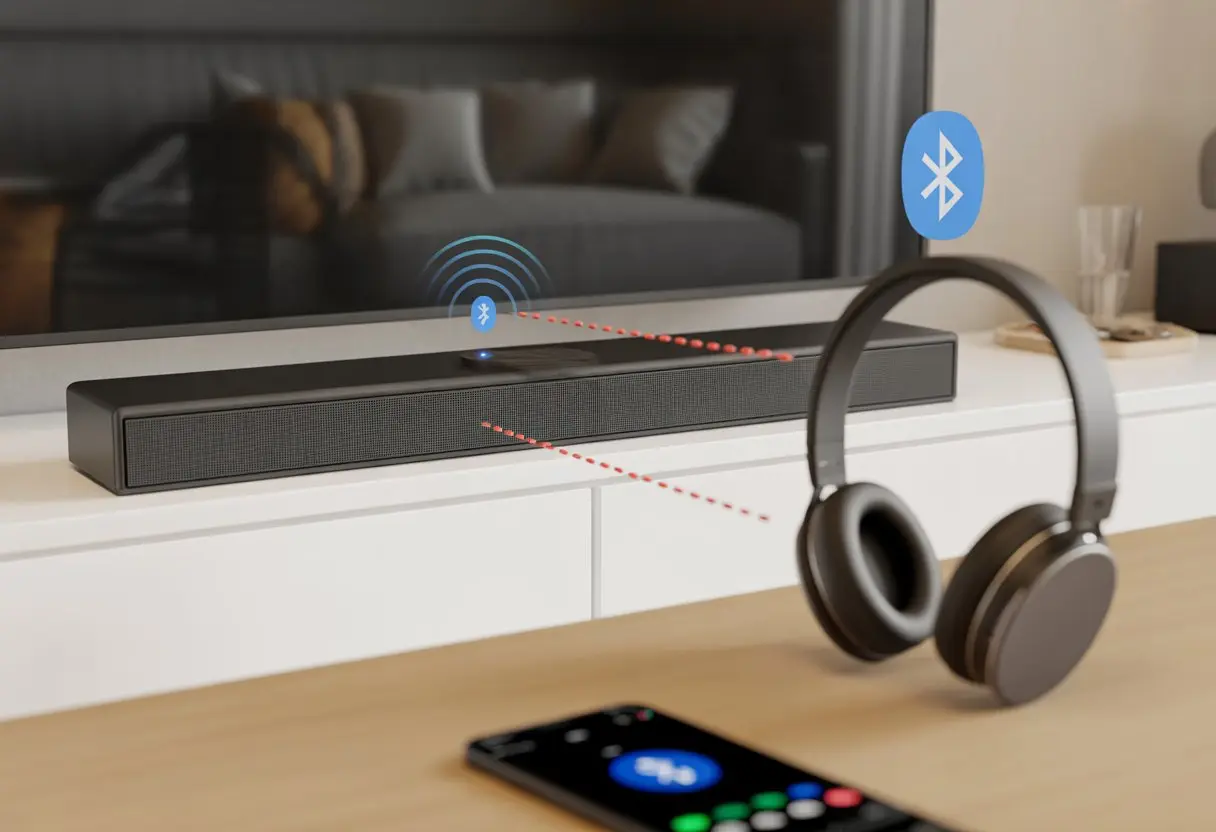
It honestly feels like these gadgets speak different languages and just refuse to cooperate. Some soundbars act as the last stop for your music or movie audio, while headphones expect to get sound sent out to them.
So your late-night TV dreams—without waking everyone—get crushed as you fumble through settings and wires.
There are a few workarounds and rare exceptions (like certain Bose devices that have tricks, as folks mention in this Reddit thread about Bose SimpleSync), but for most of us, it’s just not that easy.
Let’s dig into why this wireless wish is so tricky—and maybe what you can do about it.
How Bluetooth Headphones and Soundbars Work
Everyone loves the freedom of wireless, but sometimes Bluetooth headphones just don’t play nice with soundbars.
It helps to know how these things try (and fail) to talk to each other, especially when the audio just won’t go where you want.
Basics of Bluetooth Technology
Bluetooth is like that friend who wants to introduce you to everyone at the party, but only one person at a time. It’s a short-range wireless tech that lets devices—phones, headphones, soundbars—share audio.
Bluetooth runs on radio waves in the 2.4 GHz range. When you pair headphones or a soundbar, they set up a private connection.
Usually, Bluetooth is built for a one-on-one chat—one sender, one receiver. This makes things simple, but it’s also the main reason using Bluetooth headphones with a soundbar is rarely smooth.
Devices need to agree on a Bluetooth version and a set of rules for talking. Some new updates let you connect to more than one thing, but a lot of gear just doesn’t support it.
And honestly, it’s frustrating when your headphones and soundbar refuse to “just work.”
Understanding Audio Output Channels
Audio output channels are just the ways your devices send sound out into the world. TVs, soundbars, and headphones all try to keep the audio flowing down the right path.
Most TVs and soundbars only send sound to one place at a time. If the soundbar is connected, the headphone jack or Bluetooth connection might turn off—or the other way around.
Sometimes, using both at once needs a special setting. For example, Samsung TVs have a Multiple Audio Output feature, so you can use Bluetooth headphones and TV speakers or a soundbar together.
You can check out more about that for Samsung devices here.
It sounds fancy, but not every brand or model even tries to make this work. Sometimes you have to dig deep in settings or buy extra gear just to get both devices playing together.
How Soundbars Differ From Headphones
Let’s be honest: headphones and soundbars aren’t the same kind of Bluetooth device. Headphones are made to receive audio from your phone, laptop, or TV.
Their job? Let you listen without waking up the whole house.
Soundbars, though, usually work as Bluetooth receivers—not senders. Most soundbars want you to send music or movie sound to them, not from them.
That’s why so many soundbars can’t send audio to headphones. On brands like Polk, the Bluetooth in the soundbar only takes input, so pairing them with headphones just won’t happen.
You can see more about that in this Polk Audio community thread.
Basically, headphones and soundbars are like two people at a dance, both waiting for the other to make the first move. No wonder nothing happens.
Common Reasons Your Bluetooth Headphones Don’t Work With Your Soundbar
Bluetooth headphones and soundbars often act like they’re allergic to each other. There are some real technical reasons behind it, and sometimes it’s just plain old tech stubbornness.
Device Compatibility Issues
Let’s face it—not every gadget wants to mingle. A lot of soundbars are built mainly to receive audio, not send it out.
Most soundbars see Bluetooth headphones and basically say, “Sorry, not my job!”
Some soundbars have Bluetooth, but it’s just for getting music from your phone or laptop, not for sending sound to headphones. Even expensive models may not support headphone output.
If the manual doesn’t mention “Bluetooth transmit” or “headphone support,” it probably won’t work.
To avoid shouting Bluetooth signals into the void, check the soundbar’s specs. Look for phrases like “Bluetooth output” or “headphone transmission.”
If that’s missing, it’s a closed party.
Incorrect Pairing Mode or Settings
Bluetooth connections can be as moody as a cat. Sometimes, the problem is you didn’t put the soundbar in the right mode, or the headphones just don’t show up.
You usually need to hold certain buttons for a few seconds on both the soundbar and headphones to start pairing mode.
If you skip this step or rush it, your devices might just ignore each other. Check for blinking lights—no disco, no connection.
Some soundbars won’t pair with two things at once. If your soundbar is already paired with your phone, it might snub the headphones.
Unpair other devices first. People have found more info about this in online forums when setting up their gear.
Audio Output Limitations
Your soundbar might not want to share its audio with headphones because of how it’s designed. Many soundbars only let sound go to one output at a time—either the speakers or another connection, not both.
If your soundbar is hooked up to the TV with HDMI ARC, optical, or something else, it might block Bluetooth output. Sometimes you can fix this by switching output sources in the settings, but often it’s just not possible.
Certain brands use Bluetooth as input only, not output, so your headphones never get a chance. The soundbar just says, “I only take, never give,” which isn’t exactly generous.
You can check for extra product support, but some soundbars just don’t cooperate.
Bluetooth Version Differences
Even if both devices have Bluetooth, their “languages” might not match. If your soundbar uses an older Bluetooth version than your new headphones, they might not work well together—or at all.
Bluetooth has had more updates than most apps, so mismatched versions can wreck your plans. Older versions might not support the profiles needed for headphone audio.
Some soundbars only support basic Bluetooth audio, which isn’t enough for modern wireless headphones.
Check what version each device uses. If one’s stuck in the Bluetooth Stone Age and the other’s ready for the future, your connection is doomed.
Sometimes updating firmware helps, but usually, you’re stuck with what you’ve got.
Fixing Bluetooth Connection Problems
Sometimes, Bluetooth headphones and soundbars act like rivals on a reality show—both want attention, but they just won’t cooperate.
If your headphones and soundbar refuse to work together, the good news is you can often fix it with a few simple steps.
Checking Bluetooth Settings on TV and Soundbar
First, check your Bluetooth setup. Most TVs only send audio to one Bluetooth device at a time, so it’s either talking to your headphones or your soundbar—not both.
See if your TV supports multiple audio output. Samsung users can find a Multiple Audio Output setting under Accessibility.
Look for something similar in your TV’s menu.
On the soundbar, make sure it’s in Bluetooth pairing mode (usually flashing lights—very disco). Confirm Bluetooth is on for both TV and soundbar, and that neither is paired with a neighbor’s mystery device.
If everything looks right and still nothing works, check for firmware updates on your soundbar or TV. Outdated systems can be stubborn about connecting.
Resetting Devices and Pairing Again
Electronics get cranky, so sometimes you need to show them who’s boss. Unplug the soundbar and TV for a minute to reset them.
This little “nap” can fix more issues than you’d expect.
After plugging them back in, clear old Bluetooth pairings. Both the TV and soundbar menus should let you “forget” or “remove” devices.
Fresh starts aren’t just for New Year’s—Bluetooth likes them too.
Now, try pairing again. Put the soundbar in pairing mode first.
From the TV, search for Bluetooth devices and pick your soundbar. Fingers crossed, they’ll finally get along.
If not, try the classic restart. Sometimes a simple reboot is all it takes.
Testing With Different Devices
Let’s troubleshoot like detectives. Grab another Bluetooth device—a phone, tablet, or even your neighbor’s Bluetooth fridge—and try connecting it to the soundbar.
If other devices connect without a hitch, the problem probably sits with your TV. Check your TV brand’s support forums or live chat for special steps.
If the soundbar refuses to pair with anything, you’ll want troubleshooting tips straight from the manufacturer.
Testing with other devices helps you pinpoint the issue, so you spend less time guessing and more time actually listening. Once you find the culprit, most problems don’t stand a chance.
Device-Specific Setups and Limitations
Trying to hook up Bluetooth headphones to soundbars—especially with fancy Bose gear or ARC connections—can get complicated fast.
Not every system wants to play nice, and sometimes it feels like the tech is just playing games with you.
Bose Soundbar 500 and Bose Smart Soundbar 900
With the Bose Soundbar 500 and Bose Smart Soundbar 900, you’d think pairing any Bluetooth headphones would be easy. Nope.
These soundbars don’t just send their sound to whatever wireless device you throw at them.
Direct Bluetooth pairing between these soundbars and Bluetooth headphones, like the Bose Noise Cancelling Headphones 700, usually isn’t possible.
The soundbars are mainly designed to receive Bluetooth audio from your phone, not to send out their own audio to headphones.
When you try connecting both at once, you usually end up with silence, frustration, or maybe both.
You might look for a “headphone mode” on the soundbar and come up empty. The only thing missing more often than that option is the remote itself.
Simplesync for Bose Products
Before we toss our Bose gear out the window in a fit of Bluetooth frustration, let’s talk about Bose SimpleSync. Bose cooked up this feature so certain speakers and headphones can actually chat with each other. SimpleSync allows the Bose Noise Cancelling Headphones 700 to pair with a Bose soundbar like the 500 or the 900.
But don’t get ahead of yourself—SimpleSync isn’t a free-for-all. Only certain Bose headphones get an invite. Non-Bose headphones and earbuds? Nope, they’re left out. And with SimpleSync, we usually can’t control the headphone volume separately unless we grab our phone or open the Bose Music app.
Connecting might take a few steps, and honestly, it sometimes feels like opening a new bank account. Still, the reward is worth it: we can blast the soundbar or keep things private, depending on whether we’re trying not to wake someone up.
ARC and Soundbar Connections
Trying to use the TV’s ARC (Audio Return Channel) with a soundbar? That’s when things get interesting. ARC sends TV audio to the soundbar over HDMI, which is great—until we want to use Bluetooth headphones at the same time.
Most TVs won’t send audio to both HDMI ARC and Bluetooth headphones at once. Usually, the TV picks one output and ignores the other. So if the soundbar is playing through HDMI, our headphones might get nothing—unless we dive into the settings every time. Some TVs let us split audio, but it’s rare and often brings a delay that’ll make movie night feel like a bad dub.
Sometimes, we can get both working through a workaround, but that usually means switching audio outputs or fiddling with Bluetooth settings. Users talk about this a lot when trying to use Bluetooth headphones with a soundbar.
Here’s a quick breakdown:
| Setup | Headphones & Soundbar Together? | Notes |
|---|---|---|
| ARC (HDMI) + Bluetooth headphones | Usually not together | Most TVs pick one output |
| Bose SimpleSync (Bose-only gear) | Yes | Must use compatible Bose headphones |
| Non-Bose Bluetooth headphones + Bose soundbar | Often not possible | Limited compatibility |
When You Still Can’t Listen: Troubleshooting Like a Pro
Nothing ruins the vibe faster than headphones and soundbars refusing to cooperate. We can often fix these problems ourselves if we know where to start.
Bluetooth Signal Interference
Our Bluetooth signal sometimes gets tripped up by Wi-Fi routers, microwaves, game controllers, or even the neighbor’s gadgets. What can we do? First, check the distance—keep headphones and soundbar within 30 feet, and try to avoid thick walls.
Crowded rooms full of electronics can choke the signal. Turning off other devices or moving to another spot sometimes helps.
Quick checklist:
- Stay close, avoid thick walls.
- Turn off extra Bluetooth or Wi-Fi stuff.
- Don’t hide the soundbar behind metal things.
Interference can sneak up on us, but if we spot it, we’re halfway to a fix. For more ideas, Wired has some troubleshooting tips that are surprisingly helpful.
Firmware and Software Updates
We’ve all been there—everything works, then a new update drops and suddenly, nothing connects. Our Bluetooth headphones and soundbars need current firmware to talk to each other. If one or both have outdated software, weird connection issues can pop up.
Let’s hit the support page for our brand and grab updates for both the soundbar and headphones. This step gets skipped a lot but can fix strange glitches fast. Samsung, for example, says updating firmware might solve stubborn pairing trouble. Here’s a Samsung guide to fixing Bluetooth soundbars.
Don’t forget about TV and streaming box updates—they can mess with audio connections, too. When everything’s up to date, our tech has a much better shot at working together.
When to Get Tech Support
Sometimes, after moving devices, updating software, and circling the living room three times, we need backup. That’s when it’s time to contact tech support.
Support pros can walk us through extra steps or spot something we missed. Services like JustAnswer offer help from verified experts. At the very least, we’ll have someone to share the Bluetooth pain with.
We’ll need the model number and a description of the problem. With a little luck (and help), we’ll get sound flowing through our headphones without all the drama.
Alternative Ways to Connect Audio Devices
When Bluetooth headphones and the soundbar won’t play nice, it’s easy to feel stuck. But we aren’t out of options. There are clever, sometimes old-school, ways to get audio where we want it.
Using Wired Headphones With a Soundbar
If you’re a fan of classic fixes, wired headphones might just save the day. Most soundbars don’t have a headphone jack (which feels “vintage” now), but if yours does, plug in and enjoy private listening—no Bluetooth hassle, just wires.
If there’s no headphone jack on the soundbar, check your TV. Many TVs have a headphone output, so you can plug in there and skip the soundbar. It’s not fancy, but it works. For soundbars with only optical or HDMI ARC, an external DAC (digital-to-analog converter) can bridge the gap—just be ready for some cable clutter.
Here’s a quick comparison:
| Setup | Equipment Needed | Main Benefit |
|---|---|---|
| Headphone jack | Wired headphones | Easiest connection |
| TV headphone out | Wired headphones | Widely compatible |
| External DAC | DAC, headphones, cable | Better sound control |
Connecting via Smartphone or Tablet
Our phones and tablets aren’t just for scrolling. If the soundbar won’t cooperate, we can stream audio straight to our Bluetooth headphones from our phone or tablet. Just install the music or streaming app on the device and connect the headphones.
Some TVs and streaming boxes have apps that send TV audio to your device. This is perfect if you live with people who can’t stand your favorite shows. For certain smart TVs, features like Samsung’s Multiple Audio Output let you use the soundbar and Bluetooth headphones at once, so nobody misses out.
Honestly, sometimes it’s just easier to play audio from the phone or tablet directly. The only real challenge? Not dropping the phone on your face.
Utilizing Computer as an Audio Bridge
Got a computer at home? Turn it into an “audio bridge” between your TV, soundbar, and Bluetooth headphones. Many computers can take audio from HDMI input or use recording devices to capture system sound. Then, you can send that audio out to Bluetooth headphones, while the TV speakers or soundbar stay active for everyone else.
You might need an HDMI capture card or an audio out from the TV to the computer. Then, just switch the computer’s output to your Bluetooth headphones or earbuds. It’s a bit of a project, but it gives you more control—and you get to feel like a tech wizard when it works.
Choosing the Right Accessories and Support
Before we beg our soundbar and headphones to cooperate, let’s pick the right accessories and know our support options. The right gear (and a little help) can save us hours of hassle—and maybe some sanity.
Speaker Accessories and Add-Ons
If our Bluetooth headphones just won’t talk to the soundbar, the right add-ons might help. Bluetooth transmitters act like peacekeepers—plug one into the soundbar’s audio out (like a 3.5mm jack or optical port), and it’ll send sound wirelessly to our headphones. Some transmitters connect to two sets of headphones at once, which is great if you’re not into sharing snacks but want to share audio.
A good audio splitter or a digital-to-analog converter also helps if the soundbar doesn’t have the right outputs. For soundbars with HDMI-ARC or optical only, a matching adapter is a must. Always check compatibility and reviews before buying.
| Accessory | What It Does |
|---|---|
| Bluetooth Transmitter | Sends soundbar audio to wireless headphones |
| Audio Splitter | Lets multiple headphones plug in at once |
| DAC Adapter | Converts digital audio output for other devices |
Sleep Headphone and Earbud Accessories
Falling asleep with your favorite sounds is awesome—until your headphones vanish under the pillow or stop working. Accessories like silicone earbud covers, adjustable headbands, and cleaning kits help keep sleep headphones comfy and running well.
Soft Velcro straps can secure loose cables, and replacement pads come in handy if your headphones start looking rough. If you use wireless earbuds for sleep, a snug charging case keeps them from disappearing overnight.
Most sleep headphone accessories fit specific models. If you’re not sure what works, check the manufacturer’s site or ask support before buying stuff you’ll never use.
Warranty and Product Support Options
Let’s be real: electronics sometimes act up for no reason. That’s why it’s good to check the warranty info for your Bluetooth headphones and soundbar. Most big brands offer at least a one-year warranty, and some have extended coverage if your gear decides to quit early.
You can track orders and get help with returns or repairs through the brand’s website or your account. Samsung’s support page lets you search for fixes, process repairs, or track replacements (and yes, there’s a guide for Bluetooth pairing issues). Having the product serial number ready makes everything faster—and saves you from endless hold music.
If you’re stuck, reaching out by phone, chat, or email usually beats throwing the remote across the room.
Tips for Seamless Listening and Avoiding Future Issues
Anyone who’s tried to binge-watch with wireless headphones and a soundbar knows it shouldn’t be this complicated. We just want to enjoy our setup—no degree in home repair required.
Best Practices for Bluetooth Pairing
Want smooth listening? Start with the basics: make sure your headphones and soundbar are fully charged. Otherwise, you’ll waste time troubleshooting a dead battery.
Pair devices in a quiet spot. Microwaves, Wi-Fi routers, and other Bluetooth gadgets can mess with the signal. Keep the headphones close to the soundbar at first. Use the pairing modes from the manuals—sometimes it’s a weird button combo that’s easy to miss. For brands like Bose, features like SimpleSync can make connecting soundbars to headphones a lot easier.
If things get stubborn, try a quick reset or “forget and re-pair” in your settings. Patience—and maybe a snack—helps here.
Regular Device Maintenance
Let’s be honest—living that Bluetooth life takes a bit of effort.
I always start by wiping away dust, grime, and those stubborn fingerprints from my gadgets. Dirty contacts or ports? They can turn even the best tech into a grumpy mess.
Take a look at your cables if your soundbar or headphones still rely on them. Damaged wires? Trust me, you’ll end up with the wrong kind of silence.
If you hit a connectivity snag, just restart both devices. Sure, it sounds like a cliché fix, but you’d be surprised how often it works.
Don’t forget about battery health. Old batteries can cause annoying dropouts, and nobody wants their music interrupted or to call in backup just to fix a speaker.
Staying Up to Date With Product Firmware
Firmware updates might sound intimidating, but honestly, they usually take less time than making a cup of coffee. They fix bugs, patch security holes, and sometimes even help our devices talk to each other better.
If you want your gadgets to stay on top of things, check the manufacturer’s website or their app for updates every so often. A lot of those annoying problems—like devices dropping connections, lagging, or refusing to work with other gear—disappear after a quick firmware update.
Samsung, for example, lets users connect headphones and soundbars at the same time, but those features usually need the latest firmware to work right.
Try making firmware checks a monthly habit, maybe right after you swap out your toothbrush. That way, your listening setup stays ready to go, and you avoid those annoying tech surprises.

From a young age, I have always had a big interest in technology, and this blog is an extension of that interest. Through this blog, I hope to provide others with all of the information they need regarding tech options to consider, and things such as compatibility. Some of the different items I will be discussing include headphones, smartwatches, and how to fix common issues.
- How to Get Text Messages on Fitbit Versa 2 Android: Simple Guide for Users - October 13, 2026
- Why Doesn’t My Fitbit Record My Sleep? Quick Troubleshooting Guide - October 13, 2026
- How to Change Face on Fitbit Versa 2: Quick and Easy Guide - October 12, 2026
Related Posts: