Fitness trackers can be a surprisingly helpful sidekick for anyone trying to move more, sleep better, or just keep track of how many steps we took while searching for the remote. These little gadgets count our steps, log our exercise, track our sleep, and sometimes even nudge us to stop sitting like potatoes.
But for visually impaired users, finding a tracker that’s actually user-friendly can feel like a workout in itself.
Most fitness trackers cater to people who can see their screens. It’s a bit like designing shoes only for people with one foot—sure, it helps some, but leaves others out in the cold.
For visually impaired folks, accessibility isn’t just a bonus; it’s the whole point. Voice feedback, simple controls, and smartphone compatibility with screen readers aren’t just nice—they’re essential.
Before buying, we really need to check how the device shares info. If it only flashes tiny numbers on the band, that’s not gonna help.
Battery life, easy charging, water resistance, and compatibility with accessible apps also matter. We spent hours digging and testing to find the best fitness trackers that help visually impaired users reach their goals—without making us squint or mutter under our breath.
Best Fitness Trackers for Visually Impaired Users
Let’s be honest—counting steps in our heads never works out. We dug up the best fitness trackers for visually impaired users, so we can all stop guessing and start tracking.
Grab your sneakers and get ready to actually know how far we’ve walked (or at least planned to walk)!
Pautios Senior Fitness Tracker

This watch is a solid pick for anyone who wants easy step tracking without messing with a smartphone. If setting up new tech usually ends with us googling “How do I turn this thing on?” this one’s a relief.
Pros
- Simple operation—no phone or app needed
- Bright, easy-to-read display that’s friendly to aging eyes
- Tracks health basics like steps and heart rate
Cons
- Setup instructions could use a translator (or just a bigger font)
- No voice feedback for menus
- Sleep tracking sometimes ignores our midnight snack runs
We tried the Pautios Senior Fitness Tracker and immediately liked that setup was more “press and go” than “rocket science.” If we’ve ever fumbled with Bluetooth or complicated apps, this device feels like a breath of fresh air.
Menus are minimal, so we don’t have to decode random icons. The large, colorful screen stands out—no more squinting at tiny numbers. Swiping is smooth, and the design doesn’t scream “I’m wearing a computer on my wrist.”
Whether we’re walking off a big lunch or just counting steps around the kitchen, the pedometer does its job. If sleep tracking is a must, this watch might forget we’re napping (just like our kids do).
The instructions left us scratching our heads a bit; not quite comedy gold, but definitely puzzling. Still, the battery lasts ages, so we spend more time moving and less time searching for a charger.
For low-fuss fitness tracking, the Pautios Senior Fitness Tracker helps us hit our goals without needing a tech degree—just don’t expect it to remind us where we left our coffee.
LIVIKEY Fitness Tracker Watch

This tracker is a budget-friendly workhorse for anyone who wants simple stats without squinting at tiny text.
Pros
- Easy-to-navigate display—no detective glasses needed
- Sleep and heart rate tracking feels reliable for the price
- Battery life that outlasts our gym motivation
Cons
- Buzzes us for activity maybe a little too eagerly
- Setup instructions could be clearer
- Display isn’t big enough for everyone with low vision
Wearing this feels like joining a step-counting club, minus the weird robes. The vibration alerts make it tough to ignore when it wants us to move—no more dreaming of cheesecake all day.
For heart rate and sleep tracking, it holds up surprisingly well for a tracker that costs about as much as lunch. The button layout and simple screen are a win—no “tap seven times to find your heart rate” nonsense.
We do wish the text and icons were bigger or bolder; folks with limited eyesight might need to get creative or use a magnifying glass for some details.
Setup took us on a little QR code adventure we didn’t exactly ask for. Not the tech journey we wanted before our first jog, but once paired, notifications and reminders rolled right in.
Perfect for those of us (okay, all of us) who lose our phones between the couch cushions. In short: it’s a solid starter, but don’t expect it to fix our farsightedness.
Fitbit Inspire 3 Fitness Tracker

If we want a tracker that doesn’t drive us nuts but actually helps us move, the Inspire 3 is a safe bet.
Pros
- Vibrating alerts and friendly buzzes keep us in the loop without squinting
- Lightweight design—we forget we’re even wearing it
- Silent alarm wakes us up without waking up the cat
Cons
- The tiny screen isn’t easy for everyone to read
- Syncing with our phones can be confusing at first
- Most smart features need the phone nearby—sorry, it’s not psychic
When we strapped on the Inspire 3, we noticed right away how comfortable it felt. This thing is so light, we almost wore two at once and didn’t notice.
The gentle buzzes for calls and notifications are easy to feel. The silent vibrating alarm is a nice touch—especially when sneaking out of bed before the alarm clock yells.
For those of us with low vision, the tracker’s haptic feedback is really handy. We don’t have to peer at the tiny screen to check if we’ve hit our step goal; the band lets us know with a friendly wiggle.
Setting it up took a few tries—syncing things and playing with the app felt a bit like assembling Ikea furniture with no instructions. After a few false starts, it eventually clicked.
We didn’t love relying on our phones for GPS or reading detailed stats, but once we got the hang of it, all the basics were easy to check by touch. The sleep tracking and heart rate monitoring worked smoothly in the background.
We went to bed and woke up to useful info, not just a pile of numbers. If we want a tracker that doesn’t require superhero vision and keeps us motivated, we’d keep wearing this one.
TYKOIT Senior Pedometer Watch

If we want a no-nonsense tracker that even our grandparents can use (without handing them our phones), this is a fun and simple pick.
Pros
- No phone or app needed—just strap it on and go
- Big display is easy on the eyes (and fingers)
- Fast charging and battery actually lasts a week
Cons
- Step counter sometimes seems to have a mind of its own
- Heart rate and blood oxygen features are basic
- No talking or voice support for full accessibility
We’ve wrangled a lot of fitness watches, but few are as drama-free as this TYKOIT Pedometer Watch. Setup is as easy as it gets—just charge it, pop it on, tap a few settings, and off we go counting (most of) our steps.
The large, colorful screen stands out, so we’re not squinting or hunting for tiny buttons like we’re cracking a safe. If you’d rather avoid complicated apps or syncing headaches, this one’s for you.
Accuracy can take a nap sometimes. On a long stroll outside, it mostly keeps pace, but if we’re just around the house folding socks or chasing lost pens, the step count feels a bit optimistic.
We can check our heart rate and blood oxygen with a simple tap—the features do the job, no frills. Charging is easy thanks to a magnetic cable that works on the first try (no wrestling required).
We got a solid week out of a full battery. Water resistance means we didn’t panic every time we washed our hands or got caught in the rain, though we wouldn’t swim a marathon with it.
If voice feedback or talking features are a must, this won’t be the end-all-be-all. But for simple activity tracking without the headache, it’s a strong, friendly choice.
Garmin Vivosmart 5

If we want a tracker that plays nice with our eyes (or lack thereof), this one deserves a real shot.
Pros
- Super bright, easy-to-read screen for large text
- Painless setup and comfy to wear all day
- Handy safety alerts for emergency contacts
Cons
- Menus can be tricky to navigate at first
- Some features need the phone nearby
- Not the best for really small wrists
The Garmin Vivosmart 5 surprised us with its simple, straightforward design. The larger, brighter screen makes it a lot less of a guessing game—no more squinting or asking a friend to read our steps.
Notifications light up the screen in big text, so we won’t need to hold it two inches from our face just to see who’s texting. Setting it up took a little patience (and maybe some cursing at Bluetooth), but once we figured it out, daily use was smooth.
The wristband didn’t pinch or feel like it might cut off our circulation, which is a plus for wearing it round the clock. Some menu options are buried deeper than they need to be, but that’s just another little adventure for our fingers.
We think the incident detection and assistance feature is clever peace of mind, and it worked well for walks outside. The battery easily lasted us the promised week—finally, a tracker that doesn’t panic at 30%.
While the band fits most of us, those with tiny wrists might find it a bit chunky. If you want practical, no-fuss fitness tracking with accessibility in mind, this one’s a strong pick.
Fitbit Inspire 3

Honestly, the Fitbit Inspire 3 just makes sense if you want a basic tracker that does its thing without trying to be your robot overlord.
Pros
- The touchscreen is bright and straightforward, so navigation feels easy—especially if you struggle with small print.
- It buzzes and vibrates for alerts, which helps if you don’t always notice visual cues.
- You can get it wet, so those “caught in the rain” moments won’t spell disaster.
Cons
- Some of the text stays tiny—still squinting over here.
- No voice assistant, so you can’t shout at it to log your snacks.
- You still need a paired phone for real-time info, so leaving your phone at home isn’t happening yet.
When I strapped the Inspire 3 on my wrist, I felt like I’d just upgraded my own software. The haptic buzz for alerts gave me a little nudge every time someone texted “what’s for dinner?”—which, let’s face it, is the most important notification.
The strong vibration settings make sure I don’t miss anything when I can’t see the screen. I poked around the menus (with fingers that aren’t exactly dainty), and the navigation felt pretty smooth.
The icons are basic and clear, and honestly, I wish more trackers made things this easy. Sure, I wish the text was a bit bigger, and if you want your tracker to actually read things out loud, you’ll have to keep dreaming.
I ran this thing through my usual routine: steps, showers, and the classic “oops, I wore this in the pool” move. With ten days between charges, I stopped worrying about losing my charger.
If you want a straightforward, sturdy, and tactile fitness buddy that won’t drain its battery in a day, this one’s a real contender for “gadget most likely to survive a busy week.”
BSLIZHEN Fitness Tracker C60
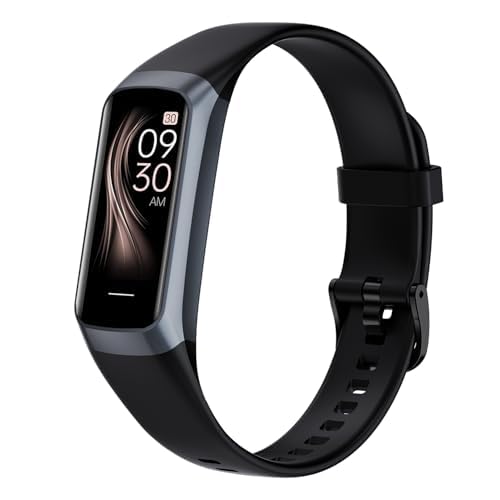
If you’re after a budget-friendly tracker that’s bright and loaded with health features, this one covers the essentials. Just don’t expect it to tuck you in at night.
Pros
- The AMOLED screen is super bright, so you can see it outside.
- It tracks your vitals automatically—no extra steps needed.
- The app pairs quickly, so you’re not stuck fumbling with settings.
Cons
- Setup takes a few steps and a bit of patience.
- Haptic alerts could be stronger for missed messages.
- The app isn’t super friendly for screen readers yet.
I charged up the BSLIZHEN tracker and wow, the display pops more than my cereal. That’s a big plus if your vision isn’t perfect.
You get all the usual health stuff—heart rate, blood oxygen, sleep tracking—right on your wrist. No digging through endless menus.
Pairing the app didn’t make me sweat. Bluetooth connected right away, and after I typed in my info (no guessing my weight, thank you), data started showing up.
Notifications for calls and texts buzzed through reliably. Sometimes I wished the buzz was stronger, but maybe it’s saving the drama for Netflix.
The style is clean and slim. Swapping watch faces is almost too easy—I changed mine three times before lunch.
If you don’t want a bulky tracker or a dim screen, this one’s a nice compromise. The lack of screen reader features in the app isn’t ideal for totally blind users, but for folks with low vision, it works as a practical daily option.
Aukire Fitness Tracker

If you want a feature-packed tracker that’s actually easy to see and doesn’t look like a calculator strapped to your wrist, the Aukire watch is a solid choice.
Pros
- The bright AMOLED screen is readable in sunlight—even for those of us who squint without glasses.
- It tracks heart rate and blood oxygen 24/7, so you always know if your heart’s racing from excitement… or from that third donut.
- It’s lightweight and comfy enough to forget you’re wearing it—until it vibrates for a long-overdue stretch.
Cons
- The app’s voice-over features could be way better—some menus leave us scratching our heads.
- Only two watch faces use big, easy-to-read digits; the rest aren’t so friendly.
- Vibrating alerts are a bit timid; a few more rumbles would help.
Honestly, I noticed right away how sleek it looked and how it didn’t feel like I was lugging around a brick. The curved AMOLED display is colorful and—thank goodness—shows big, clear numbers on most main screens.
For anyone with vision challenges, that’s a game-changer. Setting up the Aukire with the VeryFit app was surprisingly painless.
You get real-time heart rate and blood oxygen stats right on your wrist, so no more fiddling with your phone just to check your pulse. The fast charging and seven-day battery life meant I could ignore my charging cable for a while.
When I tried the reminders, the vibration felt a bit too polite—more of a gentle “excuse me” than a “HEY, MOVE!” Still, it worked.
Not all the watch faces are vision-friendly, but at least you can pick one that won’t make you squint. If you want a tracker that works hard, looks sharp, and mostly keeps you in the health loop, the Aukire is a pretty good pick.
Pautios Senior-Friendly Fitness Watch
Looking for a fitness tracker that doesn’t make you feel like you need an IT degree? The Pautios pedometer watch just works, no fuss.
Pros
- You don’t need a phone or app—just put it on and go.
- The display is big and clear, so you can actually read it.
- Charges quickly and lasts up to a week.
Cons
- Heart rate readings can be a bit unpredictable.
- Fewer advanced features than the expensive options.
- Some features may still need the app, even though the box says otherwise.
I don’t want to download five apps or mess with endless Bluetooth settings just to count my steps. This watch skips all that and works right out of the box.
The oversized screen feels like it was made for tired eyes. I don’t have to squint or hunt for my glasses just to check my steps.
Tracking sleep is as easy as falling asleep—though lying awake worrying doesn’t seem to count. I charged it once at the start of the week and almost forgot about it.
The battery lasts longer than my patience at family events. The magnetic charger snaps on easily, like a little high-five for getting your steps in.
Since it’s waterproof, you don’t have to panic if you wash your hands or get caught in the rain. Sometimes the heart rate monitor seems a little stubborn and wants a second try.
And if you want extra features, you might have to use the app after all. But for those who want simple daily tracking and big numbers, this watch keeps things easy and stress-free.
If you like gadgets simple and reliable, you could do a lot worse.
Amzhero Health Tracker

If you want a fitness tracker that nails the basics and doesn’t break the bank, this one’s worth checking out.
Pros
- Tracks heart rate, sleep, oxygen, and more—almost like your own mini nurse.
- The battery lasts ages, so you can stop babysitting your charger.
- Vibration alerts help you catch calls, texts, and reminders.
Cons
- Setting it up can feel like a puzzle only a wizard could solve.
- Screen brightness isn’t as high as you might hope.
- Button navigation is a bit clunky, especially if you’re in a hurry.
Amzhero’s tracker covers the main health features, plus a few extras. I like how it keeps tabs on my sleep and oxygen.
The 24 sports modes made me ambitious for about five minutes, then I remembered snacks exist. The band feels comfy, and they even throw in a backup in case your dog gets curious.
Notifications buzz through with strong vibrations, so you won’t miss much. That’s a relief if you don’t want to keep checking your phone.
For visually impaired users, those vibrations really help keep up when you’re out and about. The screen is bright, but not blinding, so I found myself squinting a bit outside.
Waking the screen with the button sometimes tested my patience. Setup was a bit of an adventure—not the friendliest process, but once paired, it did its job.
For the price, the Amzhero Health Tracker offers core health features and useful notifications, though you’ll need a bit of patience for that quirky setup.
Buying Guide
Let’s be honest: picking the right fitness tracker isn’t just about grabbing the one in your favorite color. For those of us who are visually impaired, there’s a bit more to consider, and let’s face it—fancy lights don’t do us much good.
Key features to look for:
- Voice feedback and audio cues
- Large, easy-to-find buttons
- Tactile vibrations
- Good battery life—because who wants to charge every day?
- Simple app or device pairing
If you can’t read tiny beeps or flashes, it makes sense to focus on trackers that talk or vibrate when it’s time to move. Honestly, a tracker that’s easy to feel and use really changes everything (and maybe saves you from pressing the wrong button over and over).
| Feature | Why It Matters |
|---|---|
| Voice Cues | You’ll hear progress and alerts without squinting |
| Vibration Feedback | Silent, tactile notifications keep things clear |
| Large Buttons | Fewer button-mashing mistakes—always a win |
| Easy Pairing | Less time fiddling, more time moving |
| Battery Life | No one wants to charge a tracker every night |
A simple setup matters a lot. If syncing the tracker takes longer than your workout, it’s probably not the right fit.
Try wristbands that feel comfortable and adjust easily. You don’t want them flying off mid-walk or run.
Sweat-resistant materials help too, so things don’t get gross or sticky.
And don’t forget water resistance. You never know when you’ll get caught in the rain or have a close call with the sink.

From a young age, I have always had a big interest in technology, and this blog is an extension of that interest. Through this blog, I hope to provide others with all of the information they need regarding tech options to consider, and things such as compatibility. Some of the different items I will be discussing include headphones, smartwatches, and how to fix common issues.
Related Posts: