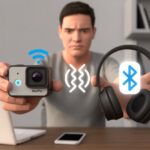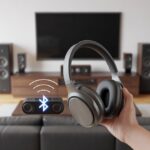
We’ve all been there. You grab your favorite Bluetooth headphones, all set for movie night, and then—nothing. They just won’t connect to your home theater system. It’s almost like you’re stuck outside the party while the speakers are having a blast without you.
Usually, Bluetooth headphones don’t work with home theaters because these systems either don’t have built-in Bluetooth or just aren’t compatible with certain headphone models.

Things get even weirder when your home theater actually has a Bluetooth feature but refuses to cooperate with your headphones. Sometimes, it acts like a Bluetooth VIP club with a super picky guest list—no headphones allowed.
We’ve gathered some tips and fixes for these situations. Let’s try to get your sound working again, so you can enjoy your movie—or at least not annoy the neighbors.
Bluetooth Headphones vs. Home Theater Systems: Can They Actually Be Friends?
Honestly, our living rooms are a battlefield of tech. On one side, you’ve got your trusty Bluetooth headphones. On the other, there’s the big, proud home theater system.
Do we really have to pick sides? Or can we get these gadgets to get along?
Understanding Bluetooth Connectivity
Bluetooth headphones use wireless signals to connect to other devices. But home theater systems are often stuck in the past when it comes to Bluetooth support.
Most receivers were built back when “Bluetooth” sounded like a sci-fi villain. So, when you try to pair your headphones and nothing happens, it’s not your headphones’ fault—it’s because the home theater isn’t inviting them in.
Modern home theaters with built-in Bluetooth usually only support audio input. That means they’ll take music from your phone, but they won’t send movie sound out to your headphones.
If you want to use Bluetooth headphones, you’ll probably need an external Bluetooth transmitter made for TVs or receivers. And yes, you’ll end up fiddling with more wires to avoid wires. The irony isn’t lost on anyone.
Comparison of Wired and Wireless Headphones
Wired headphones are like the reliable, low-maintenance friend. You just plug them into the headphone jack or an adapter, and you’re good to go.
Sound quality stays solid, and there’s barely any delay between the action and the sound.
Wireless headphones, especially Bluetooth ones, come with their own quirks—like audio lag. Imagine watching an action movie and hearing the explosion a second after you see it. Some wireless headphones use radio frequency (RF) instead, which usually means better range and less lag than Bluetooth.
If you want to dig deeper, here’s more about different wireless headphone technologies.
Device Compatibility Explained
Compatibility is the real test for getting your headphones and home theater system to work together. Not all home theaters support Bluetooth audio output.
Some older receivers don’t have Bluetooth at all. Newer ones might only let you use Bluetooth for input.
Check if your home theater system can send sound to Bluetooth headphones. If it can’t, a Bluetooth transmitter might save the day.
Just plug the transmitter into your home theater’s audio output—like the RCA or optical port—and your headphones should finally get their invite. Need a bigger overview? This guide lays it all out.
Sometimes, you just need the right adapter to make everything work.
Common Pairing Problems: Why Your Headphones Won’t Play Nice
Even when you do everything right, Bluetooth headphones can act like stubborn cats. Pairing problems can pop up anywhere, from power issues to weird compatibility glitches.
Bluetooth Pairing Procedure Step-by-Step
Pairing isn’t always as simple as “push-and-play.” Miss a step, and suddenly your headphones ghost you.
Start by putting your headphones in pairing mode. Usually, you hold down the power or Bluetooth button until a light blinks.
Then, use your home theater remote or device to get into the Bluetooth settings and scan for new devices. If your headphones don’t show up, check if they’re already paired with something else—like your phone hiding in the next room.
Sometimes, you have to “forget” the headphones in the settings and try again. And if nothing works, just restart everything. That trick has saved a lot of us more than once.
For more help, here’s a simple Bluetooth connection guide.
Power Issues and Low Battery Surprises
Low battery is one of the biggest Bluetooth villains. If your headphones are nearly dead, they might not even enter pairing mode, or they’ll disconnect at the worst moment.
Some headphones give you a red light or a voice warning. Others pretend they’re fine—until the music starts and they just quit.
It’s worth giving them a full charge to avoid the guessing game. Some brands even cut back on features or audio quality when the battery gets really low.
Staying charged keeps you from blaming the wrong thing when all you needed was more juice. If you want more info on how battery life messes with connections, check out this list of headphone issues and fixes.
Bluetooth Versions and Compatibility Woes
All Bluetooth isn’t the same. Your home theater might use an old version, while your new headphones run on the latest and greatest.
That’s like inviting people to a party where half the guests only speak Klingon.
Bluetooth devices try to play nice with each other, but not every feature will work across versions. If your home theater supports Bluetooth 3.0 and your headphones want Bluetooth 5.2, you might get glitches, weak sound, or nothing at all.
Check both devices’ Bluetooth versions before you get frustrated. Sometimes upgrading your system or using a transmitter that matches your headphones’ version solves the problem.
Want to know more? Here’s a good read on compatibility problems.
Audio Format Drama: Why FLAC and WAV Can Be Party Poopers
Let’s be honest, not every audio file is ready for a Bluetooth dance-off. Sometimes, our love for high-quality sound gets blocked by weird format issues.
Audio Format Compatibility with Bluetooth Headphones
Try playing a FLAC or WAV file through your Bluetooth headphones and things can get awkward fast. Most Bluetooth gear loves MP3 or AAC. But throw in a big WAV or high-def FLAC, and compatibility just disappears.
Why does this happen? Bluetooth headphones and home theater receivers don’t always “speak” the same audio format language. FLAC and WAV files are often too complex or heavy for standard Bluetooth tech.
It’s like asking someone to recite Shakespeare backwards on karaoke night.
Here’s a quick breakdown:
| Audio Format | Bluetooth Friendly | Size |
|---|---|---|
| MP3 | Yes | Small |
| AAC | Yes | Small |
| WAV | Rarely | Huge |
| FLAC | Rarely | Large |
If you want a smooth connection, stick with MP3 or AAC. Formats like FLAC need more decoding power and often aren’t supported. Here’s a handy audio file format guide if you want the details.
Decoding Audio Quality Problems
Even if your Bluetooth headphones manage to connect, quality issues can ruin the fun. WAV and FLAC are known for amazing sound, but Bluetooth compresses all that data down to fit through a tiny pipe.
When you try to stream a WAV or FLAC file, your headphones or adapter might convert it into something smaller, tossing out details to make it work. So, you lose much of that high-quality sound you were hoping for.
If you want things to work smoothly and actually hear your music, compressed formats like MP3 are usually your safest bet. If you’re curious about why lossless formats don’t always play nice wirelessly, check out this FLAC vs WAV comparison.
Troubleshooting Steps: Become a Detective (Without the Hat)
Wireless audio sometimes feels like a magic trick that’s gone sideways. But with the right steps, you can figure out what’s wrong.
Let’s dig into the most common reasons your Bluetooth headphones won’t team up with your home theater.
Basic Troubleshooting for Bluetooth Headphones
Before you panic or shop for new headphones, try the basics. Make sure your headphones and home theater system are both charged and powered on.
It sounds obvious, but sometimes the simple stuff trips us up.
Disconnect your headphones from any other devices. Bluetooth headphones usually only connect to one thing at a time, unless you’ve got a fancy multipoint model.
Put your headphones into pairing mode. Every model is a little different, but it usually means holding the power button until a light flashes.
On your home theater, jump into the Bluetooth settings and start the pairing process.
If you’re still stuck, try turning everything off and on again. It’s basic, but it works more often than you’d think.
Here’s a Bluetooth headphones pairing guide if you need more step-by-step help.
Resetting to Factory Settings
Sometimes, your headphones just need a fresh start. Factory resetting wipes out all previous pairings and settings.
How to factory reset:
- Power off the headphones.
- Hold down specific buttons (often power and volume up) for several seconds.
- Watch for blinking lights or a voice prompt.
You’ll find the exact button combo in your manual or on the manufacturer’s website. After resetting, you’ll need to pair your headphones like they’re brand new.
If your headphones still refuse to connect, it might be time to check in with manufacturer support. Some extra tips are in this headphones not working article.
Interference and Bluetooth Signal Issues
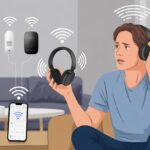
Bluetooth signals, honestly, just hate sharing space. Devices like Wi-Fi routers, microwaves, and even cordless phones love to mess things up. The 2.4 GHz frequency? Yeah, it’s crowded.
Let’s try moving the home theater system and headphones away from other electronics to see if things improve. Thick walls, metal furniture, and mirrors also get in the way—a wireless signal can’t really punch through metal or bounce off mirrors like it’s in a superhero movie.
If interference keeps crashing the party, maybe a Bluetooth signal booster could help. These gadgets boost connection strength and make the wireless setup more reliable. If you want more details on how interference messes with the connection, check out this Bluetooth headphones signal guide.
Update Firmware for Better Results
Outdated firmware is like dragging around an ancient flip phone—just can’t keep up. Firmware updates fix bugs, improve performance, and sometimes help with compatibility on newer home theater systems.
To update, head over to the manufacturer’s website or use their smartphone app. Usually, you’ll connect the headphones to a computer or phone with a cable or over Bluetooth. Just follow the prompts, cross your fingers, and let the update run.
It’s a good idea to check for firmware updates every few months. Some manufacturers even roll out fixes for issues just like this. Firmware might actually make a bigger difference than you’d expect for getting Bluetooth headphones and home theaters to play nice.
Connection Alternatives: When Bluetooth Just Won’t Cooperate
Let’s be real—Bluetooth can be a pain sometimes. Thankfully, there are backup plans that don’t involve yelling or tossing remotes across the room. These methods may not be flashy, but they work and keep movie night going.
Using Wired Headphones or Earbuds
When Bluetooth flakes out, a trusty wire saves the day. Wired headphones, and especially earbuds, plug right in and skip all the high-tech drama. If the home theater or TV has a headphone jack, setup is super simple—no pairing or dropped connections, just instant sound.
Some newer TVs and receivers ditched the classic headphone jack, which is frustrating, but we can get creative. If the TV supports RCA or optical out, there are adapters that can help. No Bluetooth tangles—just smooth, reliable sound straight to your ears.
And hey, you won’t need to worry about charging batteries. No mid-movie silence. Just grab the nearest headphones, plug in, and relax. Wired headphones might even sound clearer or louder than Bluetooth ones.
Trying a USB Connection
If the home theater supports it, a USB connection can be a real lifesaver. Some headphones and earbuds come with USB plugs meant for computers, but sometimes they work elsewhere. Certain soundbars, smart TVs, and even game consoles support USB audio devices, so you can just plug in and get sound—no Bluetooth drama.
The catch? Compatibility is a toss-up. Not every home theater or TV supports USB audio. It’s worth checking the manual or just giving it a shot. If it works, USB usually gives more stable sound and less interference than wireless connections.
Bonus: USB connections often power the headphones, so battery anxiety goes out the window. That means less fuss and fewer complaints when things suddenly stop working during your favorite show.
Exploring Headphone Jacks and Adapters
Sometimes plugging in headphones isn’t as easy as it should be. Fancy home theaters don’t always put a headphone jack front and center. That’s where adapters save the day and rescue us from silent movies.
Most TVs and receivers come with RCA, optical, or HDMI outputs. With the right adapters, you can convert these signals for wired headphones. For example, an RCA-to-3.5mm adapter lets you hook up standard headphones or earbuds through the red and white audio outputs.
If things get tricky, some adapters include volume controls or built-in amps—handy for boosting quiet dialogue. Double-check compatibility, and suddenly your old headphones work with the latest gear. It’s not magic, but with adapters, it sure feels close.
Conclusion: Achieving Bluetooth Bliss (Or Settling for Less)
Let’s be honest—our dreams of seamless wireless headphones often crash into the reality of finicky tech. You set up your home theater and expect it to work, but suddenly you’re the one troubleshooting instead of relaxing.
Sometimes, you just need to scoot a bit closer to the receiver. Other times, you have to turn off that one gadget that’s messing everything up.
But honestly, a lot of the time it comes down to compatibility. Your shiny new headphones might use a newer “Bluetooth language” than your theater system can understand. You can check out this Bluetooth compatibility guide for more details.
Here’s a quick rundown of what usually trips people up:
| Problem | Quick Fix |
|---|---|
| Outdated Bluetooth | Check device versions and compatibility |
| Interference | Move closer or turn off nearby devices |
| Wrong pairing mode | Reset and try pairing again |
| Pairing limit reached | Remove old devices from the list |
If nothing seems to work, you might end up reaching for a wired connection or, well, just using regular speakers. Wireless is awesome—when it decides to cooperate.
Some days you’ll float on that perfect sound, and other days you’re tangled in wires again. At least you know you gave it a real shot, right?

From a young age, I have always had a big interest in technology, and this blog is an extension of that interest. Through this blog, I hope to provide others with all of the information they need regarding tech options to consider, and things such as compatibility. Some of the different items I will be discussing include headphones, smartwatches, and how to fix common issues.
- Why do my Bluetooth headphones not block outside sound? Sorry, They’re Not Mind Readers! - October 5, 2026
- How to Use a Smartwatch for Running Without Looking Like You’re Checking Your Stocks - October 4, 2026
- Best Bluetooth Headphones for Long Flights: Ears Happy, Neighbors Jealous - October 4, 2026
Related Posts: