Most of us like to know how many steps we’ve taken, but honestly, nobody wants to count accidental trips to the ground. Fitness trackers with fall detection have really changed how we look at daily movement.
Instead of just tracking our runs or calories, these gadgets can actually call for help if we take a spill. That’s a big upgrade.
Smartwatches and fitness bands aren’t just for gym rats anymore. They can be a lifeline for anyone worried about falling—especially older folks or people with health conditions.
These days, trackers use built-in sensors to spot hard falls and alert someone automatically. That kind of peace of mind? Yeah, heart rate graphs just can’t compete.
When we’re picking out a fitness tracker for fall detection, a few things really matter. The device needs to be comfy and easy to wear, day or night.
Good battery life means we’re not always hunting for a charger. We want an easy setup, clear alerts, and a solid app that actually talks to our phone.
Not all trackers are made equal, so we dug in to find out which ones actually have our backs—and our knees, honestly.
Best Fitness Trackers for Fall Detection
Let’s be real—nobody plans to do the splits by accident. That’s exactly why we rounded up the best fitness trackers that help detect falls.
Now we can work out with a little more peace of mind, and maybe worry less about those slick kitchen floors.
Fitbit Inspire 3 Tracker

If you want a wellness tracker that keeps an eye out for tumbles and keeps you healthy without making you look like you’re prepping for liftoff, the Fitbit Inspire 3 is a solid call.
Pros
- Tracks falls and quickly alerts us if we take a spill
- Light and comfortable—sometimes we forget it’s even there
- Battery life outlasts most of our getaways
Cons
- Some features hide behind a paywall (not cool)
- Needs our phone for GPS tracking
- The screen’s a bit small, especially when we’re sweaty and rushing
We tossed the Inspire 3 on our wrists and pretty much forgot about it until we actually needed it. Its lightweight design didn’t bug us, even when we wore it to bed.
That’s great for anyone who wants sleep tracking and fall alerts. No itching or sweat marks, even during a workout.
The Inspire 3 kept an eye out for falls, and that gave us some peace of mind—especially when we got a little too wild with home workouts. The step reminders were just pushy enough to nudge us without being a total nag.
We do wish Fitbit didn’t put some of the coolest features behind a premium paywall. And yeah, sometimes we had to squint at that tiny screen, especially mid-run.
For basics like fall detection, heart rate, and sleep, though, it really covers us. If you’re willing to live with a few quirks, this one’s worth a look for reliable health tracking with a little bit of personality.
Fitbit Inspire 3

If you want a health tracker that won’t nag you every minute but still nudges you if you trip or flop, the Inspire 3 is a solid pick.
Pros
- Slim and comfy, barely noticeable under a sleeve
- Sleep and heart tracking make us feel like wellness pros
- Battery seems to last forever (or at least longer than our Monday motivation)
Cons
- No built-in GPS, so our phone has to play backup
- Fall detection isn’t native yet—we’re waiting on a firmware fairy
- The screen is tiny, so expect a little squinting
Wearing the Fitbit Inspire 3 feels like strapping on a superpower, minus the cape. We swam, showered, and strolled in the rain without worrying about the tracker.
It survived more puddles than our socks, to be honest. This little band tracks steps, sleep, and stress so we can at least pretend we’re on top of our wellness game.
Gentle vibrations for notifications made it feel like our wrists were getting secret messages. The app is straightforward, so we spent less time fiddling with buttons and more time counting steps.
We did have to rely on our phones for GPS and fall detection, which isn’t perfect. The Inspire 3 keeps things light and comfortable for everyday use.
If you want all the latest tech bells and whistles, you might notice a few gaps. Still, for fuss-free tracking and peace of mind, this one’s tough to beat for the price.
Fitbit Sense 2

If you want fall detection and health tracking without looking like you strapped a smartphone to your wrist, this is an easy choice.
Pros
- Built-in fall detection and alerts give us peace of mind
- Battery lasts well beyond a couple of Netflix marathons
- Stress and sleep tracking help us fake being well-rested
Cons
- Some features need a paid subscription (yep, that again)
- The app can nag more than our aunts at Thanksgiving
- Phone needs to be close for some alerts
We spent a week with the Fitbit Sense 2, and it stuck to our wrist better than our health goals. Fall detection worked quietly in the background.
When we tested it (gently, don’t worry), it notified us quickly. That extra bit of safety feels reassuring, especially on clumsy afternoons.
Charging once a week was a relief. Remembering to charge gadgets every night is just exhausting.
The Sense 2 didn’t add to our stress—unless you count the slightly guilt-inducing “Don’t forget to breathe” reminders. Some of the fancy stuff sits behind a paywall, which is a bummer.
If you want a comfortable and dependable fall detection tracker with a nice design, the Fitbit Sense 2 brings more than just steps and calories. Honestly, it’s the nerdy friend every fitness buff needs.
Fitbit Inspire 2 Fitness Tracker

If you want a fitness tracker that knows when you hit the floor (by accident or on purpose), the Fitbit Inspire 2 is an easy pick—just watch out for the occasional tech tantrum.
Pros
- Sleek and comfortable for all-day wear
- Tracks steps, sleep, and heart rate non-stop
- Impressive battery that actually survives the week
Cons
- No built-in fall detection; real fall alerts need a paired phone and workarounds
- Some phone notifications can get overwhelming
- You need a Google account, even just to count steps
Let’s be honest: some fitness trackers are so bulky they feel like mini fax machines on our wrists. Not this one.
The Inspire 2 slides on so easily, we forgot it was there—right up until it vibrated to remind us we’d been sitting too long. Fall detection isn’t built in, but you can use some apps if your phone is nearby.
It won’t leap to your rescue, but it tries. Once we strapped this on, the real fun started.
The heart rate tracker kept a watchful eye, so we could finally see the effect those “quick” jogs had (spoiler: not much, but at least Fitbit believed in us). The sleep insights made us realize five hours of sleep doesn’t count as “deep,” even if it felt like a coma.
No need to charge it every night, which is a win in our book. Our friends turned into step rivals, and Fitbit even gave us a shiny badge for surviving Monday.
If you can forgive it for not calling for help when you trip over the dog, the Inspire 2 is a strong daily pick for anyone just trying to stay upright and motivated.
Garmin vívosmart 5 Fitness Tracker

A smart pick for anyone who cares about health tracking, fall detection, and a device that won’t leave us stranded midweek.
Pros
- Lightweight and comfy for all-day wear
- Easy-to-read screen that’s way better than the last version
- Reliable fall detection with quick alerts to friends or family
Cons
- Fall detection only works if our phone is nearby
- Customization is limited compared to fancier watches
- The screen is a bit small for big hands
Let’s be honest, fall detection is something we hope we never need, but when we do, we want it to just work. With the Garmin vívosmart 5 strapped on, we felt a bit more secure—as long as our phones weren’t lost in the couch cushions.
During daily walks and runs, it picked up activity changes fast. When we “accidentally” took a tumble during yoga (it happens), the incident detection kicked in and was ready to ping our emergency contacts.
It’s nice to know our watch has our backs, even if our yoga skills don’t. We liked the lightweight design, which never bugged our wrists, even for sleep tracking.
The battery lasted longer than we expected, so no frantic charger hunts before bed. It fits small wrists without looking clunky, which is a big win if you’re tired of wearing a brick.
Not everything’s perfect, though. Fall detection and emergency alerts need our phones and a signal, so it’s not a magical safety net everywhere.
The screen is bright and clear, but still tiny—so if you’re in a hurry or have big fingers, tapping out a setting can be a clumsy dance. All in all, the Garmin vívosmart 5 Fitness Tracker does what we want: it tracks our health, activity, and quietly (sometimes not so quietly) looks out for us if we take a spill.
Amzhero Health Fitness Tracker

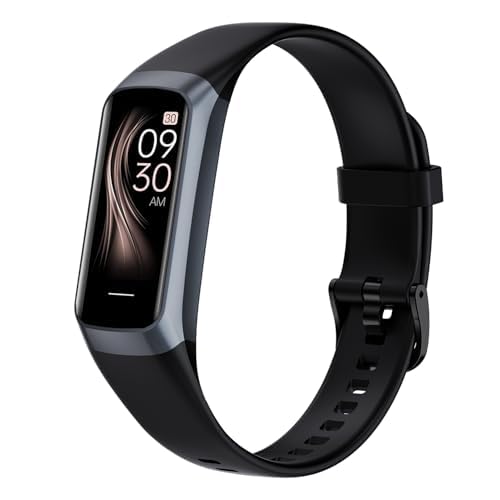
If you’re after a budget fitness tracker with basic fall detection and health features, this little gadget really pulls its weight. It’s cheap, but it doesn’t feel totally “cheap”—which is a rare combo.
Pros
- Tracks heart rate, sleep, oxygen, and steps all day
- Battery lasts so long we actually forgot where we put the charger
- Waterproof enough to survive our kitchen mishaps
Cons
- Setup takes some fiddling—felt like programming a VCR again
- You have to hit a button to wake the screen, so it’s not quite tap-and-go
- Looks a little basic—no one’s going to stop you at the gym to ask about it
We strapped on the Amzhero tracker and honestly, it surprised us for the price. It kept an eye on our vitals (and our ego), even letting us know when our heart rate spiked during a lunchtime chili cook-off.
Notifications show up without buzzing our wrist off, and the band’s comfy enough that we forgot we were wearing it—until someone thought it was just a rubber bracelet. The waterproofing handled our accidental dishwashing session without a hitch.
Battery life? It lasted so long we kind of wanted to see if it would ever die. Setting it up with our phone took some patience, but we got there. The screen isn’t fancy, but it does what you need.
For those of us who trip over our own feet, it’s nice knowing there’s at least some fall detection and health tracking on our wrist—without shelling out a fortune.
Amazfit Band 7 Tracker

If you just want a solid, no-nonsense fitness tracker with some fall detection, the Amazfit Band 7 gets the job done. It keeps your wrist looking smart without killing your budget.
Pros
- Battery life goes for days—charging becomes an afterthought
- Bright, roomy display is easy on tired eyes
- Alexa’s built in, so you can ask for help with your hands full of groceries
Cons
- Band feels a bit snug if you’ve got wider wrists
- Fall detection isn’t super advanced
- Notification buzz can sneak up and startle you mid-nap
We didn’t expect to be wowed by such a slim gadget, but the screen pops with color and even our clumsiest tester could read their steps. Menus scroll quickly, and the heart and SpO2 monitoring make us feel like we know what we’re doing.
Alexa comes in handy, especially when we’re mid-workout and need to check the weather or set a timer. Charging? We barely remembered to do it—the battery just kept going.
It’s light, it stays put, and even survived our “dancing for fitness” experiment. We do wish the band had a little more give for bigger wrists.
If you’re after ultra-detailed fall alerts, it’s not an Apple Watch, but it’s enough for peace of mind. The Amazfit Band 7 Tracker is an easy pick if you want reliable health tracking and a dash of smart tech.
Fitbit Charge 6

If you want smart fall detection, daily motivation, and a close look at your lazy nights, the Charge 6 makes it easy—just watch out for those band rashes.
Pros
- Delivers solid health stats and nags you to move when you need it
- Battery lasts through more than one workout (which is more than we can say for ourselves)
- Google features, sleep tracking, and a color screen actually make wrist tech useful
Cons
- You have to make a Google account to use all the features
- SpO2 night stats are confusing—like, do we need a decoder ring?
- The original band sometimes itches more than a workout
We tossed the Fitbit Charge 6 on our wrist and suddenly felt like health detectives. It logged every heartbeat, every sprint, and every “oops, was that a nap?” with way more detail than we expected.
It doesn’t miss much, especially not a sudden plop onto the floor. We liked that it encouraged us to move, pestered us to breathe, and quietly judged our snack breaks.
Battery life meant we couldn’t use “it’s dead” as an excuse, and the built-in GPS nudged us to walk a little farther just to see the map. Google Wallet and Maps on our wrist felt pretty slick, even if we grumbled about yet another password.
The included band? Not our favorite. We scratched more than we ran some days. If you’ve got sensitive skin, you’ll want to swap it out.
Sleep insights are nice, but the SpO2 readings felt like a science class we didn’t sign up for. For fall tracking and everyday health, the Fitbit Charge 6 keeps us honest, active, and (mostly) alert.
AKUMAKA Health Fitness Tracker

Go for this one if you want a fitness tracker that’s all business, keeps an eye out for falls, and won’t nag you for monthly fees.
Pros
- The app is free—no hidden subscription traps
- Monitors your health around the clock, like a tiny robot nurse that never calls in sick
- Battery lasts 10 days, which is longer than most of our houseplants
Cons
- No display—if you like staring at your wrist, you’ll notice
- Setup is a little hands-on (Bluetooth everything!), so patience helps
- The band is plain—if you want a fashion statement, look elsewhere
We’re not always graceful, so we appreciate a tracker with fall detection. The AKUMAKA band stays out of our way and quietly tracks everything we do.
Sometimes we forget it’s there—until it buzzes to remind us we actually got a text. Not having to pay for the app is a relief, honestly.
It works on both Android and iPhone, so nobody in the group chat complains. Health monitoring runs automatically.
Sleep? Tracked. Heart rate? Monitored. Steps? Counted, no guilt trips.
Charging is quick, and it takes ages before needing more juice. There’s no flashy screen, so you won’t feel like James Bond—but you also won’t check your wrist every ten seconds.
We do miss some of the style other trackers have, but for reliable, practical health tracking, we’re happy with our plain little secret agent.
Fitbit Charge 4 Fitness Tracker

If you want a solid fitness tracker with fall detection and don’t mind a few quirks, the Fitbit Charge 4 is a smart pick.
Pros
- Setup is quick and easy for just about anyone
- Built-in GPS lets you leave your phone at home and not get lost
- Battery lasts almost a week between charges
Cons
- Sometimes needs a firm nudge to sync with your phone
- The charging cable is fussy—don’t lose it
- Display is small if your eyesight isn’t great
Opening the box, we saw the Fitbit Charge 4 keeps things simple—and that’s a win. Setup takes about as long as finding a missing sock.
All the key features are here, including fall detection (a little life insurance for clumsy moments), heart tracking, and a waterproof case. Swim laps or shower—no worries, the band can handle it.
Wearing it all day, it never felt bulky or uncomfortable. It buzzes when you hit your active zone, so you actually know when to celebrate those rare workout highs.
The step counter, GPS, and sleep tracking made us feel like health nerds in the best way. It even kept up when we left our phones behind, though the tiny screen made reading stats feel like squinting at cereal box fine print.
Battery life impressed us most: almost a week before we remembered it needed a charge. The charger, though, is easy to misplace and connecting it feels like plugging in a USB drive—never right the first time.
If you want something fuss-free and can keep track of the charger, we think the Fitbit Charge 4 deserves a spot on your wrist.
Buying Guide
Picking a fitness tracker with fall detection can feel like a maze. You want something that won’t let you down when it matters most, right?
Let’s break down what actually counts, so we walk away with a device that’s got our backs—and maybe saves our pride (and wrists) now and then.
Key Features to Consider:
- Fall Detection: This is the big one. Go for a tracker that sends fast, unmistakable alerts when you need them.
- Battery Life: Nobody wants to charge their tracker more than their phone. That’s just annoying.
- Comfort: If the thing feels like a rock strapped to your arm, you’ll stop wearing it. Lighter and softer bands are the way to go.
- Water Resistance: Life gets messy—sweat, rain, and the occasional shower shouldn’t ruin your device.
- App Compatibility: Some trackers only play nice with certain phones. Don’t get stuck with something that ghosts your device.
Here’s a quick table to help size up the options:
| Feature | Why It Matters | What To Look For |
|---|---|---|
| Fall Detection | Emergency help if you fall | Fast, clear alerts |
| Battery Life | Convenience | At least a few days |
| Comfort | Daily wear | Adjustable, soft bands |
| Water Resistance | Versatility | Minimum splash-proof |
| App Compatibility | Syncing with devices | iOS and Android support |
If you want a little extra, heart rate tracking and step counting show up on most models. Still, don’t overlook a decent display—nobody likes squinting at tiny numbers after a long day.
Price definitely matters, but we’re talking about tech that could save your skin, not just another wrist accessory. Aim for a tracker that actually keeps up with you, even when gravity tries to take you down.

From a young age, I have always had a big interest in technology, and this blog is an extension of that interest. Through this blog, I hope to provide others with all of the information they need regarding tech options to consider, and things such as compatibility. Some of the different items I will be discussing include headphones, smartwatches, and how to fix common issues.
Related Posts: