Let’s be real—most of us grabbed a fitness tracker because we wanted to count steps and maybe feel less guilty about skipping leg day. But these little wrist gadgets do more than just track movement.
Turns out, we can use a fitness tracker to build our mindfulness muscles, not just our biceps.
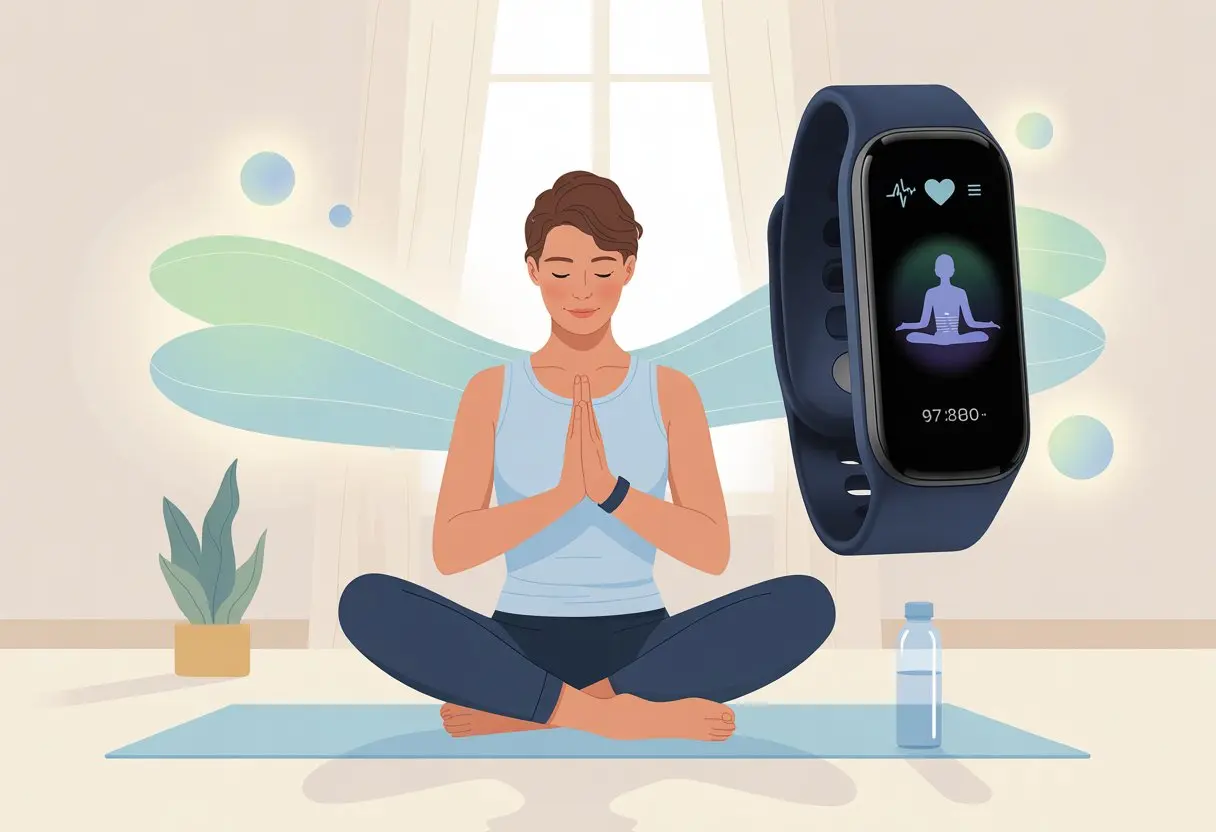
We’ve all tried to sit still and focus on breathing, but let’s be honest—30 seconds in, we’re checking emails. With a few smart tweaks, a fitness tracker can nudge us to pause, breathe, and actually check in with ourselves.
Many devices let us set mindful reminders, track meditation minutes, and log quiet breathing exercises. We get a little help staying on track, no guru required.
If you like seeing progress, apps for major trackers like Fitbit let you manually log mindfulness sessions or use built-in meditation and relaxation tools. So our fitness tracker isn’t just counting steps—it’s actually helping us slow down and stress less, one gentle buzz at a time.
Understanding Fitness Trackers and Mindfulness
We get more out of our fitness trackers than just step counts. Mindfulness and tech can actually team up, helping us focus, relax, and pay attention to what our bodies and minds are up to.
What Is a Fitness Tracker?
A fitness tracker (or activity tracker) is a wearable device that tracks steps, distance, heart rate, sleep, and sometimes even water intake. Some trackers buzz to remind us to move if we’ve been sitting too long—like a helpful, slightly naggy fitness coach on our wrist.
We can sync these gadgets with our phones to check our stats. Many let us set goals for exercise, sleep, or even calm breathing.
Newer models get so smart, they sometimes try to guess our mood. Cool? Maybe. Creepy? A little.
Most importantly, these gadgets give us feedback and show patterns in our daily lives. That makes it easier to spot habits that help or hurt our wellbeing.
The Science of Mindfulness
Mindfulness isn’t just a buzzword. It’s about paying attention to the present moment—on purpose, without beating ourselves up (even if we can’t touch our toes).
Researchers have found that practicing mindfulness can lower stress, improve focus, and boost happiness.
Here’s what’s really happening: mindfulness helps calm our racing minds and relax our bodies. Brain scans even show that mindfulness exercises can change how our brains handle stress.
Common mindfulness activities include deep breathing, body scans, and guided meditation. The hard part isn’t learning them—it’s remembering to do them.
That’s where a little tech backup comes in handy.
How Technology Supports Wellbeing
Fitness trackers do more than count trips to the fridge. Many offer mindfulness features, like reminders to breathe or short guided meditations we can follow right from our wrists.
We get gentle nudges to take a break and focus on ourselves for a second. Some trackers provide visual aids and breathing exercises to help us relax.
Others track our mood or sleep to spot stress triggers. Lately, more devices help us keep tabs on our feelings and how our bodies react to stress.
Mixing mindfulness with daily tech helps us build routines that actually stick—without needing to sit in a cave or eat kale every meal.
Setting Up Your Fitness Tracker for Mindful Living
Getting started with fitness trackers for mindfulness takes more than strapping on a gadget and hoping for inner peace. We need the right tracker, the right settings, and the best app connections to make mindfulness easier.
Choosing the Right Device for Your Lifestyle
Let’s be honest, not every fitness tracker fits our lifestyle. Some act like loyal sidekicks with meditation reminders and breathing exercises, while others just count steps and call it a day.
If mindfulness matters most, we should look for trackers like Fitbit devices or Apple Watch. These offer built-in mindfulness or breathing sessions.
Before we hit “Buy Now,” it’s smart to check if the device feels comfortable and matches our tech confidence. If we love simplicity, a tracker with easy-to-use mindfulness features will save us from gadget-induced stress—which is the opposite of what we want.
If we’re data nerds, some trackers give detailed insights into stress and well-being. Comparing features like battery life, waterproofing, and sensor types can help us decide—especially if we’re the type to meditate in the shower.
Configuring Mindfulness Settings
Once we’ve picked the perfect tracker and felt that little thrill, it’s time to set up the mindfulness features. Most devices—like the Apple Watch—let us turn on reminders for morning or evening mindfulness.
We can pick how long each session should be or set notifications so our tracker nudges us to take a mindful break instead of doom-scrolling.
Here’s a quick checklist:
- Enable Mindfulness Reminders: Schedule them for times we usually feel frazzled.
- Adjust Session Length: Some days, two minutes is all we’ve got. Other days, we’re up for a ten-minute deep dive.
- Try Guided Options: Many trackers offer audio or visual guides to help us stay on track.
It takes just a few minutes to explore these settings. That small effort pays off with a calmer, more mindful us—no need to become a tech wizard.
Syncing with Health Apps
Fitness trackers love sharing their wisdom with health apps—and syncing makes life so much easier. Fitbit and other popular trackers work with many wellness apps, giving us one dashboard for all our progress.
We can sync our tracker with apps like Apple Health or Google Fit. That way, our meditation sessions, heart rate, stress levels, and steps show up in one place.
With the Fitbit app’s Mindfulness tile, for example, we can review our mindfulness history, compare moods, and see how sessions affect our stress scores.
To sync:
- Open the device or tracker’s companion app.
- Connect it to our favorite health or wellness app.
- Double check that our data is being tracked.
As long as we remember our logins (and don’t accidentally sync with the cat’s step counter), we’ll have every mindful moment recorded.
Monitoring Physical and Mental Health
Keeping up with both our bodies and minds can feel like juggling flaming torches on a unicycle. Luckily, our fitness trackers let us peek under the hood and spot warning signs before we do something wild—like challenge grandma to a sprint.
Using Heart Rate Data for Mindful Awareness
One of the best tricks our tracker has is measuring heart rate. When our heart rate jumps during a stressful meeting or drops while we do deep breathing, we can see how our bodies react in real time.
We can watch our resting heart rate over days and weeks. If it suddenly spikes, that’s our body waving a tiny red flag—even before we realize we’re feeling off.
Some trackers send reminders like, “Hey, time for some mindful breathing.” It’s like having a tiny robot coach who wants us to chill out before our brains explode.
Knowing how our heart acts during rest and stress helps us understand our moods and physical health. We can catch possible problems like high anxiety or poor recovery before they get out of hand.
Tracking Stress Levels and Emotional Health
Modern trackers do more than count steps—they use fancy sensors to estimate stress by looking at heart rate patterns and sometimes even skin temperature or sweat. Our gadgets often give us a stress score, so when we think Tuesday was a disaster, we can check the chart and say, yep, it really was.
We can set mindfulness reminders in our tracker app. That helps us pause for meditation or a short breathing break.
When we log stress and moods, the app builds a handy history. This lets us spot trends, like if Monday meetings always mean sky-high stress (surprise!).
Using features like guided mindfulness and weekly goals keeps us on track and helps nudge stress and anxiety down.
Enhancing Mindfulness with Guided Practices
Using our fitness tracker for mindfulness might sound a bit high-tech, but it makes meditation and calming exercises way more approachable. These digital helpers give us step-by-step ways to breathe, pause, and even sneak in a short meditation—without anyone staring.
Breathing Exercises Made Easy
We’ve all been told to “just take a deep breath.” Now, thanks to fitness trackers, we can actually do it like the pros.
Our devices guide us through breathing exercises with gentle reminders or buzzing at the right intervals. This keeps us from hyperventilating or, honestly, just forgetting to breathe.
Most trackers show a visual animation or vibration pattern to guide our inhale and exhale. Sometimes it’s a pulsing ring that grows as we breathe in and shrinks as we breathe out.
Some apps let us choose how long or intense we want our breathing session to be. That way, it fits our mood—whether we’re battling anxiety at work or just waiting in line at the store.
It feels less like homework and more like a mini spa break on our wrist.
Mindfulness Sessions With Your Tracker
Good news for meditation fans and multitaskers: we don’t have to download another app to enjoy mindfulness sessions. Most fitness trackers have built-in mindfulness sessions that guide us through meditation or quiet focus time.
No yoga mat required, unless we’re feeling fancy. We can pick a quick 2-minute reset or schedule a longer pause, depending on how much drama our day brings.
During each session, the tracker gently vibrates or plays soft sounds, signaling when to focus, breathe, or move to the next step. Some even track our heart rate and stress levels for instant feedback—handy if meditation makes us sleepy instead of calm.
Many brands also let us log our own sessions. That way, we get credit for that 3-minute zen moment in the car before errands.
It turns mindfulness into a habit we can actually measure. And let’s be honest, if it didn’t count toward our daily score, did we even meditate?
Motivation and Behavior Change Strategies
If we want fitness and mindfulness to stick, we need more than wishful thinking and a shiny wrist gadget. Motivation, consistency, and a few brain hacks can keep us moving and aware—not just watching our step count go up while we sit on the couch.
Gamifying Your Path to Mindful Living
Let’s be honest—most of us have at least a little competitive streak, even if it’s just trying to beat our own records (or, let’s admit it, Greg from accounting). Turning mindfulness and movement into a game can seriously boost motivation and make behavior change a lot more enjoyable.
Fitness trackers let us set daily streaks, unlock goofy badges (did I really just get “Ten Days of Not Skipping Meditation”? Apparently, yes), or throw down challenges with friends for a dance-off rematch.
We can link our trackers with apps that nudge us toward better choices—each little buzz can remind us to put down the chips and take a quick breathing break.
Visual progress bars or leaderboards? Those things are oddly satisfying, aren’t they? They push us to move more.
Recent research found that combining step tracking with mindfulness training in an app can actually boost our drive to exercise. Science backing up our playful side? That’s always welcome. Check out this study on mindfulness and step tracking boosting motivation.
Setting and Tracking Mindfulness Goals
Nothing says “I’m taking myself seriously, but not too seriously” like setting some goals—with a twist. We can use our fitness trackers to set mindfulness goals, not just step counts.
Maybe we track how many minutes we spend in focused breathing, meditating, or just walking without staring at our phones.
To keep things doable (and to avoid bruising our egos), it’s smart to start with small, realistic targets.
Our fitness trackers can remind us to pause and reflect after activities. Some even toss in a virtual high-five when we hit our goals, and honestly, who doesn’t love a little encouragement?
If we jot down notes or record voice memos after moving, we can log tiny wins—like “didn’t trip during walking meditation.” Scheduling daily nudges for reflection or mindfulness helps us dodge the classic “I’ll do it tomorrow” excuse.
Tracking these kinds of goals can slowly raise our activity levels while keeping us motivated and present. More tips? See mindfulness and step tracking recommendations.
Physical Activity and Mindful Movement
Most of us think we’re moving more than we actually are—guilty as charged. Fitness trackers keep us honest, counting every trip from the couch to the fridge.
We can use this data to become more present and aware during each step (yes, pun intended).
Step Tracking for Present-Moment Awareness
When we turn on step tracking, we suddenly realize just how much—or how little—we move each day.
Fitness trackers don’t judge, but they do remind us that five laps around the living room only add up to so many steps.
By checking our tracker, we start noticing moments when we could sneak in extra movement, like taking the stairs or busting out a little victory dance after a Zoom call.
Walking with mindfulness lets us notice our surroundings, our breathing, and the way our feet hit the ground.
Mindful movement is really about paying attention to our bodies and our steps—even if those steps are just to the kitchen.
Mindful movement can turn simple daily actions into moments of calm and awareness, and we rack up a few more steps while we’re at it.
Using Activity Data to Promote Mindfulness
We can use data from our fitness tracker as a gentle push toward better habits. Did our step count look more like a barcode than a real number yesterday? Time to switch things up.
These cold, hard numbers turn our wishful thinking into actual goals.
By looking at activity charts, we can set reminders to pause, stretch, or take a mindful walk—outside if possible, but pacing around works too.
The tracker’s app usually has features to reflect on movement trends. When we notice which days we’re most active (or, um, least active), we can build routines that actually support our well-being.
Even fitness trackers know that mindfulness and step tracking can boost motivation to exercise.
With one eye on our data and one foot in front of the other, we’re on our way to moving with more intention—and maybe, just maybe, a little more style.
Healthy Habits: Sleep, Nutrition, and More
Getting better sleep and keeping tabs on what we eat—those two things can make or break a day. When we use our fitness trackers for more than just counting steps, we unlock some surprisingly easy ways to help our minds and bodies stay on track.
Monitoring Sleep for a Restful Mind
We all know the aftermath of a bad night’s sleep—yawning through meetings and inventing new forms of grumpy. Most modern fitness trackers check our sleep patterns, recording when we fall asleep, wake up, and how long we spend in each stage.
This isn’t just for bragging rights (“Look, I got 8 hours!”). Tracking sleep helps us spot trends.
If our tracker shows lots of restless nights, maybe we need to turn off Netflix earlier or swap late-night snacks for some chamomile tea.
Some trackers even nudge us to wind down before bed. We get to see data in fun charts that let us compete against our past selves.
Using sleep data, we can practice mindfulness by setting bedtime goals, noting how we feel after different amounts of sleep, and trying relaxation exercises when we’re tossing and turning.
Tracking Nutrition and Calories Burnt
Food is confusing sometimes, but our fitness trackers (and their sidekick apps) make it easier to see what we’re actually eating.
They help us log meals, track nutrition, and spot not just calories, but things like protein and fat content. For those of us who like numbers, it’s a math quiz we might actually win.
Tracking what we eat makes us notice if we’re snacking out of boredom or real hunger. We can see how certain foods affect our energy and mood.
Some trackers estimate calories burnt, showing the balance between what we eat and what we burn during dancing, walking, or our world-famous couch workouts.
Apps can toss in gentle reminders to drink more water or eat more veggies—without sounding like our nagging aunt.
If you want to build healthy habits using these apps, technology actually can support mindful eating goals.
Building Mindful Relationships with Your Health Data
Let’s be real—our fitness tracker probably knows us better than some friends do. When we pay attention to the story our data tells, we can spot trends that help us understand our patterns and maybe even build better relationships with ourselves (and others).
Reflecting on Patterns and Progress
When our step count drops on weekends, we have to wonder: are we resting, or just stuck in a pizza coma? Looking back at routines helps us catch these dips before they turn into habits.
We can spot what’s working and what’s not. One way to stay mindful is to schedule weekly check-ins with our tracker, just like we check in with friends.
Maybe we review our sleep stats over Sunday brunch, feeling slightly betrayed by that one night we stayed up watching cat videos.
Spotting streaks in our heart rate, activity, or even mood logs lets us keep tabs on our wellbeing—not just our waistline.
Here’s a quick mood and movement log idea:
| Day | Steps | Sleep (hrs) | Mood |
|---|---|---|---|
| Monday | 7,000 | 7 | 😊 |
| Tuesday | 12,000 | 6 | 😩 |
| Wednesday | 8,000 | 8 | 😁 |
Reviewing these trends helps us see the real connection between what we do and how we feel.
Using Insights to Support Relationships
Fitness trackers aren’t just about private data drama. When we share our wins—or those “oops” moments—with friends or family, it can actually bring us closer.
Comparing our numbers sometimes sparks new ways to cheer each other on. Honestly, asking a workout buddy to help us meet our daily goals adds a bit of friendly competition. Who doesn’t want a little bragging rights now and then?
We can use the data to check in with loved ones, too. If we notice we’re skipping workouts or not sleeping enough, maybe that’s a sign it’s time for a chat, dinner date, or just a long walk together.
Mixing mindfulness with group activities doesn’t just boost how we feel physically. It also improves our sense of connection and wellbeing.
Tracking isn’t only about the numbers. We can use our insights to start real conversations, set group goals, and support each other. Sometimes, the best step we take is toward each other.

From a young age, I have always had a big interest in technology, and this blog is an extension of that interest. Through this blog, I hope to provide others with all of the information they need regarding tech options to consider, and things such as compatibility. Some of the different items I will be discussing include headphones, smartwatches, and how to fix common issues.
- Best Aviation Headset To Buy For Student Pilots? (7 Top Picks By Budget) - October 21, 2026
- The Best Rugged And Waterproof Smartwatches - October 21, 2026
- 10 Best Military Smartwatch – Find The Best Tactical Military Watches in 2023 - October 20, 2026
Related Posts: