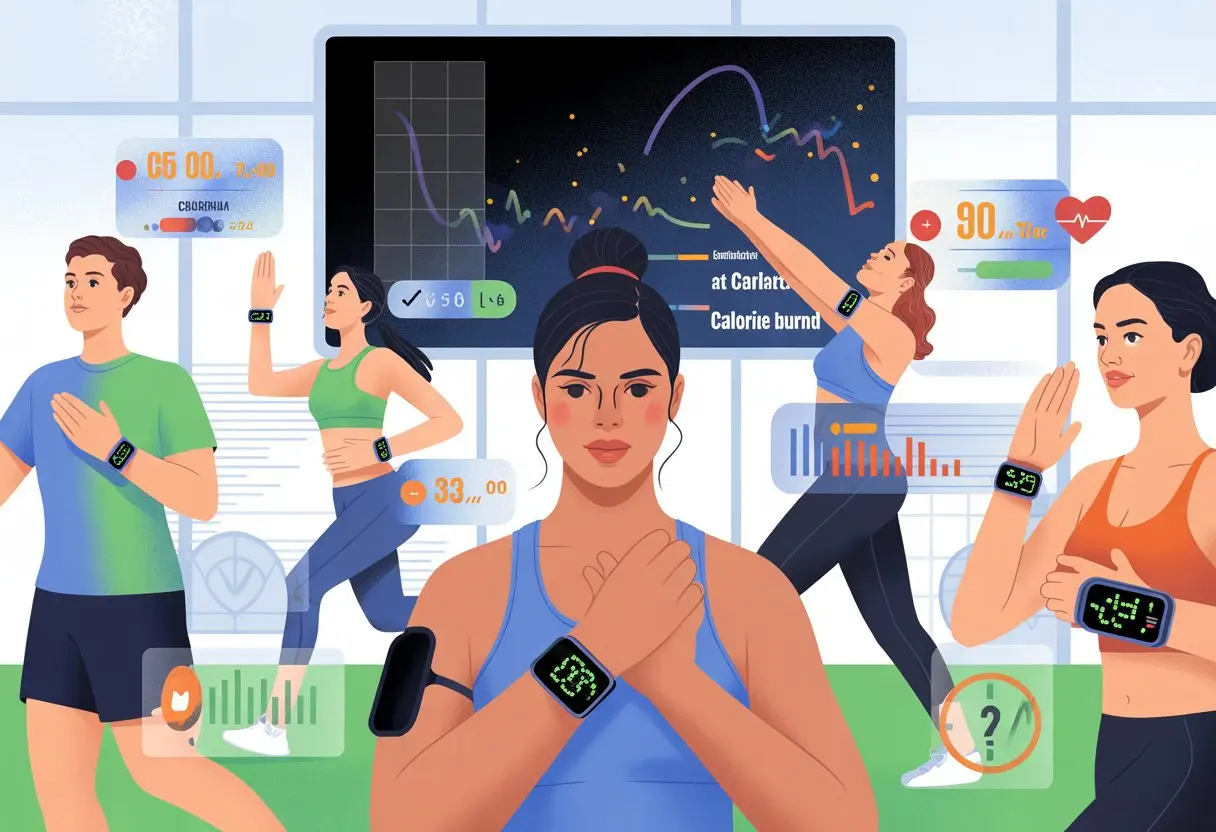
Let’s be real—most of us want our fitness trackers to be little wrist-bound experts, telling us we’ve burned off that extra handful of chips. But are they actually giving us the truth, or just trying to keep us happy (and maybe ready to buy the next upgrade)? Most fitness trackers don’t get calories burned right. Sometimes the numbers are way off—higher or lower than reality—so that “cheat day” might not be as guilt-free as you hoped.
Researchers have found that smartwatch brands often spit out calorie numbers that just don’t make sense, and the confidence is almost funny. Some trackers nail heart rate, but with calories, it feels like they’re just guessing. If you’ve ever felt your gym effort didn’t match your tracker’s numbers, maybe your wrist is the culprit.
Curious why these trackers can’t keep their math straight, or which models get closer to the truth? Hang around. We’ll dig into the numbers and maybe help you dodge unnecessary burpees.
How Fitness Trackers Estimate Calories Burned
Tracking calories burned isn’t magic—it’s a mashup of math, sensors, and sometimes a wild guess. The numbers you see come from algorithms, heart rate sensors, and even where you wear the thing.
Algorithms and Data Sources
When you strap on an activity tracker, it starts counting steps, distance, and how much you’re moving. Then, these gadgets use algorithms—basically secret recipes—to estimate how much energy you’re burning.
Your device looks at your age, sex, height, and weight. It mixes that with your movement, and sometimes your speed. Companies guard these algorithms like they’re hiding gold, so two trackers can show two totally different results, even side by side.
Don’t be shocked if your calories burned change when you switch brands. Even scientific studies say most wearables are not fully accurate.
Most tracker algorithms use:
Steps and distance
Speed and elevation (on some devices)
User profile (age, sex, height, weight)
So, if your tracker says you burned off that donut, just remember—it’s a ballpark guess, not a promise.
Role of Heart Rate Monitoring
A lot of wearables now add heart rate data to the mix. The idea? Faster heartbeats mean you’re working harder and burning more calories.
Trackers use tiny lights to check blood flow—basically, they read your pulse like a little robot vampire. Combining heart rate with movement gives a more personal estimate, especially for stuff like cycling or lifting weights where steps don’t tell the story.
Still, even with heart rate tracking, don’t trust the calorie count blindly. Studies say heart rate is pretty accurate, but calories burned can be way off—sometimes by hundreds a day.
Watching your heart rate spike on the screen feels cool, but don’t let it trick you into thinking you burned more than you did.
From Wrist to Waist: Placement Matters
Where you wear your tracker actually matters for calorie estimates. Most of us strap them on our wrists, but some devices work better on your waist, ankle, or even chest.
Trackers on the wrist mostly pick up arm movement. If you’re pushing a shopping cart, holding onto a treadmill, or just talking with your hands, your data might go a little sideways.
Wrist Tracker Quirks:
Misses calories for cycling (arms barely move)
Overestimates calories when you wave your arms a lot
Waist trackers read steps and movement from your hips better. Chest straps nail heart rate, but honestly, who wants to wear those all day? Unless you’re planning to wear gadgets everywhere, take the numbers lightly—or maybe just as lightly as a single chip.
What Influences Fitness Tracker Accuracy?
Ever look at your tracker and wonder why it thinks you just ran a marathon after a flight of stairs? There are a few big reasons calorie tracking can go haywire—what you’re actually doing, how honest you are with your profile, and the tiny sensors on your wrist.
Type of Exercise and Movement
Let’s admit it: fitness trackers aren’t mind readers. They’re best with steady, predictable stuff like walking or running. When you bike, lift weights, or twist through yoga, the calorie math can get confused faster than you do in a new dance class.
Wearables rely a lot on arm motion. If you’re pushing a stroller or carrying groceries, your tracker might think you’re just standing still. Studies show trackers can underestimate or overestimate calories burned, depending on the activity.
Cardio workouts—like running with arms pumping—usually get the most accurate results. Other activities? Not so much.
User Profiles and Settings
Trackers want to know your weight, age, height, and sometimes your sex. These details really matter for calorie math. If you fudge your numbers (maybe after the holidays), your tracker’s accuracy drops fast.
Most devices use these stats in their formulas. Two people, same workout, but different ages or weights can see very different calorie numbers. If you forget to update your info when things change, your tracker’s living in the past. For better results, you’ve got to keep your profile honest.
Sensor Technology
Here’s where things get a bit nerdy. Fitness trackers use sensors: heart rate monitors, accelerometers, and sometimes GPS. The quality and type of sensor can make your device go from “pretty good” to “what is this thing measuring?”
Some trackers measure heart rate well but still guess wildly about calories, with at least a 27% error margin for a lot of models, according to Barpath Fitness. Fancier gadgets with GPS or better heart rate sensors do a bit better, but even those can’t keep up when you do activities the sensors just don’t get.
Even the best trackers make educated guesses—they’re not handing down calorie verdicts from on high.
Popular Devices and Their Calorie Accuracy
Every tracker wants to be the best calorie counter in your gym bag, but tech still gets tripped up by sweat and, let’s be honest, our unpredictable workout routines. Some brands stand out for steps or heart rate, but calories? The reality often falls short of the hype.
Fitbit Series Performance
When you put on a Fitbit, you hope the calorie count is at least close to reality—not just a wild guess. But Fitbits, especially older models like the Fitbit Surge, often miss the mark on calories. Studies and user stories show an error margin around 27%. If Fitbit says you burned 1,000 calories, it could be off by hundreds.
Fitbit numbers often run high. For example, 16,000 steps might show 600 calories burned, but that’s likely an overestimate. Still, people love their Fitbits—probably because step and heart rate tracking is simple, and who doesn’t like a little calorie bragging?
Let’s talk about the Apple Watch. It’s stylish, sure—a good party trick or meeting distraction. But for calorie accuracy, it’s not exactly a gold standard. Studies say the Apple Watch overestimates calories about 58% of the time. Not the kind of progress bar you want if you’re justifying dessert.
Apple Watches do great with heart rate, but their calorie math still needs work. Even with all the tech, the numbers can make you think you did more than you actually did. Wearing an Apple Watch might give your ego a boost, but don’t use it as your calorie bible.
More on Apple Watch calorie estimates? Check out this Lifehacker article.
Samsung Gear S2, Microsoft Band, And Other Contenders
Now, for the rest—the Samsung Gear S2, Microsoft Band, and their friends. If you thought Fitbit and Apple had issues, these guys remind us that calorie counting is still mostly guesswork. Some models, especially from Huawei and Polar, drift even further off. Polar, for instance, overestimated calorie burn 69% of the time.
Samsung Gear S2 and Microsoft Band do okay with steps and heart rate, but they’re not reliable calorie buddies. Even the brands admit: one-size-fits-all algorithms just don’t work when we’re all so different.
Accuracy can swing wildly—not just between brands, but even among models. Bottom line? For calories, most trackers are just winging it. If you want to see how brands compare, take a peek at this Stanford study summary.
Surprising Standouts: PulseOn, Mio Alpha 2, and Basis Peak
Not every calorie-counting hopeful is doomed to disappointment. Some names—like PulseOn, Mio Alpha 2, and Basis Peak—pop up as better performers for accuracy, at least in controlled settings.
Researchers found these trackers often had smaller error ranges than the big brands. They’re not perfect by any means, but maybe they’re just the least off in the calorie counting game.
These standouts mess up fewer calories, whether they over or underestimate, so you can (sort of) plan your snack runs with more faith. Some use heart rate-based calculations, which seems to help, especially during workouts or those desperate sprints to catch the ice cream truck.
But even the “good” ones? Honestly, it’s like winning a karaoke contest when everyone’s tone-deaf. The error rates are still high if you need super-precise numbers. If you’re the type to split hairs (or calories), keep an eye out for new tests as tech gets better. There’s more about device reliability and variation in this review of commercial wearable accuracy.
Scientific Studies on Fitness Tracker Calorie Estimates
Who knew counting calories could get so scientific—and, let’s be real, a little ridiculous? Researchers, trackers, and lots of volunteers have all gone through the grinder for the sake of calorie accuracy.
We dove into two big rabbit holes every fitness tracker fan should probably know about.
This was serious science: seven wristband models, sixty adults, and a lot of sweat. Six out of seven trackers measured heart rate within about 5% of the real deal.
But calorie burn? The devices totally struggled. One tracker missed by an average of 93 calories per session. Another missed by over 400. If you’re using these numbers to plan dessert, you might be in trouble—or luck, depending on your sweet tooth. You can read Stanford’s take at fitness trackers accurately measure heart rate but not calories burned.
Error Rates in Published Research
Hoping for better news? Sorry, it gets worse. Studies often show error rates of up to 25% (sometimes even more) when it comes to calories burned. So if your tracker says you’ve burned 400 calories, it could be off by 100 or more.
That’s not exactly encouraging. Factors like skin tone, exercise intensity, and activity type can make things even messier. Some wrist gadgets get closer if they use heart rate, but none nail it every time.
If you really want to know how many calories you burn, it matters what’s on your wrist versus what’s in a lab. Medical machines and fitness trackers rarely agree on the numbers.
Lab-Grade Versus Wrist-Worn: Showdown
Picture a lab: scientists, tubes, wires, and zero style points. Indirect calorimetry is the gold standard. You breathe into tubes while running or walking, and they measure oxygen and carbon dioxide to see exactly how much energy you burn. Not fun, but super accurate.
Now, compare that to a fitness tracker. You just slap it on, and it tries to guess your calorie burn based on steps, heart rate, weight, and maybe a wild algorithm that’s had too much coffee. Studies like those on Live Science found that fitness trackers can be off by 20–30%. Expecting them to match lab gear? Good luck (maybe grab a snack while you wait).
Method
Accuracy
Experience
Calorimetry
Very high (best there is)
Tubes, wires, scientist staring at you
Fitness Trackers
Moderate to low (varies a lot)
Easy, portable, less embarrassing
Real-Life Limits Of Calorie Accuracy
When you walk, exercise, or just wave to your neighbor, fitness trackers do their best. But outside the lab, all sorts of things mess with the numbers. Body type, age, and how snugly you wear the device all matter.
If you skip the right profile settings or wear it loose, expect even weirder results. Trackers also struggle with stuff that isn’t step-based—lifting weights, biking, or wrestling your dog can confuse the sensors. Even top trackers can send calorie counts off by a few hundred calories daily, according to this Stanford study summary.
Trackers are great for motivation and spotting trends, but they’re not medical instruments. Their calorie accuracy is more ballpark than bullseye—sometimes not even in the same park.
Common Mistakes and Misreadings
Fitness trackers can be more confused than we realize. Tiny errors and odd calculations lead to some strange calorie numbers.
Treadmill Troubles
Ever hopped on a treadmill, feeling like a champ, and watched your step count? Activity trackers can struggle here. On a treadmill, you’re moving in place, so the sensors can get thrown off.
Most trackers look for arm swings or foot movement to count activity. Hold onto the treadmill handles or run with weird form, and the tracker might think you’re barely moving. Sometimes, it even thinks you’re moonwalking.
Treadmill sessions often result in obvious calorie calculation errors. You might think you torched more (or less) than you actually did. Calorie burn is tough to estimate, so take those numbers with a grain of salt—or maybe a cookie.
Quick Tips:
Let your arms swing naturally if you can.
Double-check the treadmill’s own display.
Don’t freak out if the numbers don’t match.
Lost In Translation: Algorithms Gone Wild
Our trackers run on algorithms that, honestly, could use a nap. They use your age, weight, and heart rate to guess calorie burn, but that “guess” can get wild. Small errors pile up, and “calorie magic” happens even if you barely move.
Studies show calorie estimates can be off by at least 27%, sometimes way more. It’s almost like using a dartboard to track calories. Some trackers might overestimate by 69% or underestimate by nearly 50%, depending on brand and activity. No wonder fitness tracker calorie estimates aren’t as reliable as we’d like.
What can you do?
Remember the error rate.
Treat the numbers as helpful hints, not facts.
Maybe don’t brag about those extra calories until you’re sure you earned them.
Tips for Getting the Most Accurate Calorie Data
We all want our wearable to know us better than our best friend, especially for calorie tracking. Getting the best from your fitness tracker means a few simple steps—nothing too complicated, promise.
Proper Tracker Placement
If your fitness tracker isn’t in the right spot, it might as well be tracking your TV. These devices need to pick up movement, heart rate, and other signals from the right place.
Wearing a wrist-based device? Keep it snug but not tight—definitely not dangling. Too loose, and it can’t read your pulse. Too tight, and it’s just uncomfortable.
If your tracker lets you pick left or right wrist in the app, don’t skip it. Make sure it knows if you’re Team Right or Team Left. For chest straps or clip-ons, take a second to double-check placement before you start. The goal: accurate numbers, not just a stylish accessory.
Updating User Data
Old info will fool your fitness tracker every time. Your age, weight, height, and gender are the basics it uses for calorie estimates. If you set it up back when fidget spinners were cool, it’s time to update.
Whenever your weight changes, or you hit a birthday, dive into settings and update your data. That way, the tracker’s not relying on outdated guesses. Some devices even ask for activity level—be honest, couch surfing doesn’t count as high-intensity.
It only takes a minute, but it means your calorie counts are based on today’s facts, not last year’s dreams.
When To Trust (And Not Trust) The Numbers
Fitness trackers are awesome for motivation, but their calorie numbers? Not always science-fair material. Studies show devices can both overestimate and underestimate calories, sometimes by a lot. Garmin or Apple Watch might swing their numbers, so don’t take them as gospel. Check out more at fitness tracker calorie accuracy.
Treat calories burned as general guides—good for spotting trends, not for obsessing over every digit. If you need super-accurate counts for health reasons, a lab visit (with all the weird machines) still beats a wristband. For most of us, just use the number to track changes, and remember: only you know how many cookies you actually ate.
Future of Calorie Tracking Technology
Big changes are coming for calorie tracking. New wearables and better sensors might finally make our trackers smarter and more accurate.
Upcoming Innovations In Wearables
Let’s be honest: current fitness trackers guess calories about as well as we guess what’s for dinner. But soon, wearables will use smarter algorithms that learn from your patterns and adjust for your quirks. Some companies are working on trackers that adapt as they get to know you—like a gym buddy who finally stops nagging you about kale.
We’re also starting to see new devices. Running shoes that collect data, athletic clothes with built-in sensors—these are already a thing. Soon, we’ll track more than just steps. Maybe even pajamas will judge our late-night snack runs in real time.
What’s coming soon?
Customized calorie estimates
Real-time coaching tips
Automatic activity detection
Better syncing with health apps
Pretty soon, your wearable might know you better than your pets—though, sadly, it probably won’t fetch you snacks.
Integrating More Accurate Sensors
Most fitness trackers these days use heart rate monitors and step counters. Sure, those help, but honestly, new sensors look like they could change the game.
Scientists are already testing sensors that track carbon dioxide in our breath. That could give us a much clearer idea of how many calories we’re actually burning.
Wearable devices will soon pack in a bunch of sensors that measure everything from skin temperature to oxygen usage—even what’s in your sweat.
With these upgrades, maybe fitness trackers will finally stop blaming everything on our so-called “slow metabolism.” If you spot someone sniffing their wrist, don’t panic—they’re just checking their energy burn in a super nerdy way.
As these sensors get smaller and cheaper, we’ll probably stick them everywhere—maybe even in our socks. Just, let’s hope nobody puts them in underwear. That’s a line we probably shouldn’t cross.
Hi, my name is Garrett Jones, and I am a tech enthusiast. I enjoy researching the new tech that has been released, and have a vast knowledge of the best tech to purchase.
From a young age, I have always had a big interest in technology, and this blog is an extension of that interest. Through this blog, I hope to provide others with all of the information they need regarding tech options to consider, and things such as compatibility. Some of the different items I will be discussing include headphones, smartwatches, and how to fix common issues.