Let’s be real—most of us have stared at our fitness tracker and wondered if it’s silently judging our snack choices. Using a fitness tracker for calorie tracking helps us see how many calories we actually burn each day, not just how many steps we rack up. It’s like having a tiny coach on our wrist, quietly cheering (or sighing) as we go about our routines.
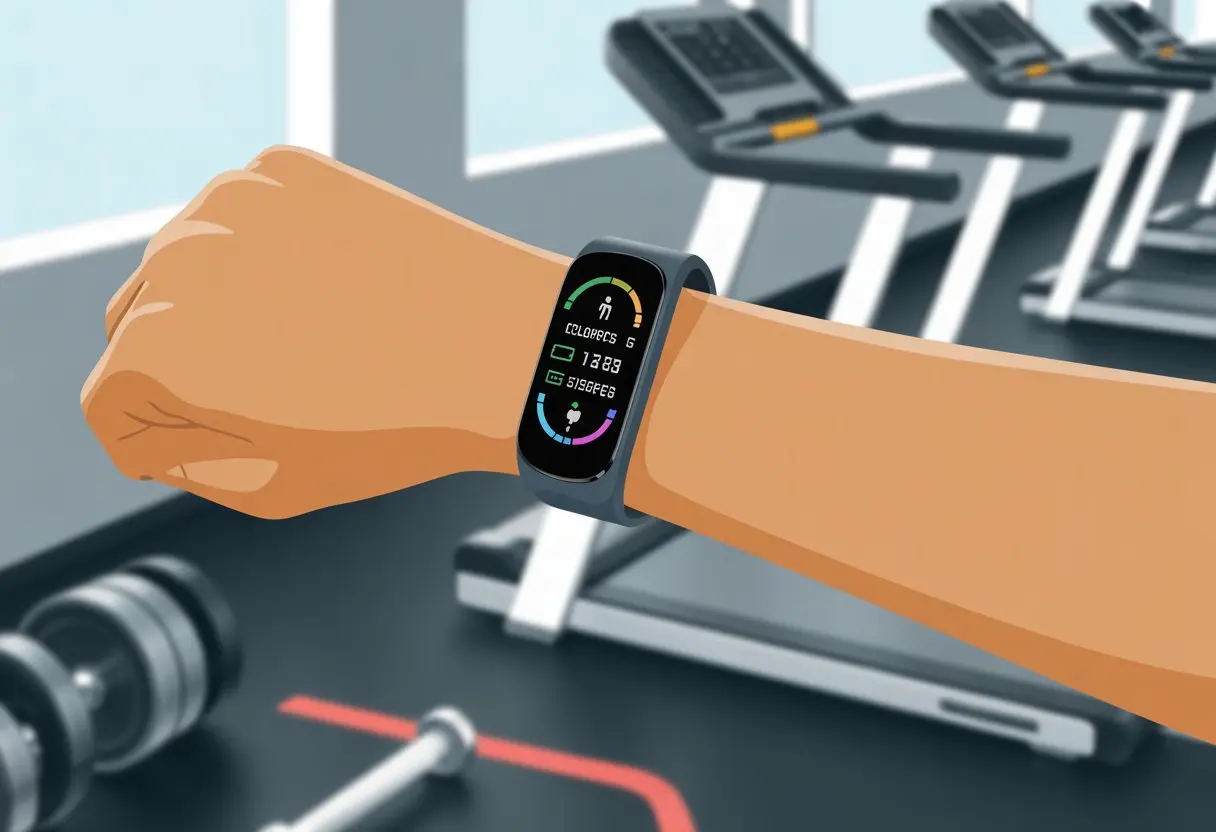
With all the hype around health gadgets, it’s easy to get swept up. But are we really using these little devices the way we should, or are we just showing off colorful wristbands?
By actually connecting our daily movement, heart rate, and personal info, we get closer to understanding what our bodies need—whether we’re running marathons or just chasing the ice cream truck.
We don’t need to be tech geniuses to get real value from our trackers. A few smart habits and honest data entry can make us calorie-counting pros—without turning things into a math class nightmare!
Getting Started With Fitness Trackers
Strapping on a fitness tracker is just the beginning. To get smarter about calorie tracking, we need to pick the right device, nail the setup process, and know exactly what we’re tracking (and what we’re not).
Choosing the Right Wearable Device
Not all wearables are the same. Some, like the Apple Watch, try to do everything except make us breakfast, while simpler bands focus just on steps, heart rate, and calorie burn.
We should think about which features actually matter to us—like whether we care about sleep tracking or want fancy notifications from our phone.
Comfort and style matter, too. If we hate how a plastic band feels or want a device that won’t clash with every outfit, those things are worth considering. Battery life is another biggie; nothing kills motivation like a tracker dying halfway through the day.
Here’s a quick list to keep us on track:
- Step Counter: Tracks daily steps.
- Heart Rate Sensor: Gives a better calorie estimate.
- Mobile App: Syncs data and shows (sometimes pretty) charts.
- Water Resistant: For sweaty workouts or accidental swims.
- Display: Bigger screens show more data, but can be harder to hide at work.
If you want more help, Forbes has some basics on picking a fitness tracker.
Setting Up Your Fitness Tracker
Once we’ve got our shiny new tracker, it’s setup time. Most fitness gadgets ask us to download an app, create an account, and answer awkward questions about our height, weight, and age.
Yeah, it’s nosy, but those details help our step counter, heart rate monitor, and calorie tracker actually work.
We should follow the device instructions. Some trackers need charging before first use (because who ships a tracker fully charged, honestly?).
If we get stuck, the app’s support section usually has step-by-step guides.
After syncing with our phone or Wi-Fi, it’s smart to set daily step or calorie goals. Let’s keep it realistic—choosing manageable targets keeps us motivated.
For more setup help, PCMag’s fitness tracker guide is worth checking out.
Understanding What Your Tracker Actually Tracks
Here’s the fun part—figuring out what our tracker is really up to. Most fitness trackers are pretty good at counting steps and use heart rate sensors to estimate calories burned.
But the calorie numbers our device spits out are just estimates, not perfect facts. The numbers depend on the tracker’s sensors, how snugly we wear it, and how honest we were about our birthday during setup.
Some trackers (like Apple Watch) even check for different movement types, like running versus walking.
We might also see tracking for sleep, floors climbed, or workouts. Not every device tracks all of these, so it’s worth poking around in the app to see what’s there.
The main thing to remember: our tracker does its best, but it doesn’t know everything about us—at least, not yet.
Want more details? Check Precision Nutrition’s guide on fitness trackers.
How Fitness Trackers Measure Calories
Honestly, using a fitness tracker feels a bit like strapping a tiny scientist to our wrist. But how do these gadgets actually turn our daily chaos into calorie data? To figure that out, we need to look at what calories mean, how our heart rate comes into play, and why our steps matter more than we realize.
Calories vs. Calories Burned
Sometimes, trackers throw around “calories consumed” and “calories burned,” and it’s easy to get mixed up. Calories consumed are what we eat—burgers, salads, or that late-night cookie.
Calories burned are what we use up while living, breathing, and dragging laundry up the stairs.
Fitness trackers focus on activity calories and our basal metabolic rate (BMR). BMR is how many calories we burn just staying alive, even if we spend the day acting like a houseplant.
The tracker usually combines BMR with our activity level to estimate our total calorie burn for the day.
These numbers are always estimates. Trackers rely on the height, weight, gender, and age we enter, so being honest is the way to go.
If we fudge the numbers to impress the app, our calorie count can get as confused as we do at a family reunion.
For more details about how this works, check out this NBC News article.
Heart Rate and Calorie Calculations
Some of us get a little excited just hearing “heart rate monitor.” Fitness trackers use heart rate data because our hearts work harder when we’re moving, and that means we burn more calories.
When our heart rate climbs—whether from exercise or a sudden spider sighting—our tracker picks up the change. It uses formulas based on the metabolic equivalent (MET) for each activity, plus our heart rate, to estimate calories burned.
This method is usually more precise than just counting steps, especially for things like cycling or swimming. But, honestly, it’s still not perfect.
Heart rate monitors do better with aerobic activities, but studies show the estimates can be off by a fair bit. So, we should treat the numbers as a guide, not gospel.
If you want to geek out, check out how fitness trackers work.
Step Count and Activity Levels
Let’s talk about steps. Most trackers really care about the step count, and there’s a good reason for that. Walking more usually means burning more calories, so counting steps is an easy way to track our activity levels without needing a science degree.
But not all steps are equal. Sprinting up a hill and shuffling to the fridge both add steps, but only one leaves us out of breath. The tracker uses motion sensors to spot each step, then multiplies by energy cost estimates (based on MET values) to guess total calories burned.
We get a clearer picture by wearing our tracker all day. This way, it can tell when we’re actually active and when we’re just moving from couch to fridge.
If you want more info about how reliable calorie tracking is, there’s a nice breakdown on fitness tracker accuracy.
Tracking Your Daily Calorie Burn
To get the most from a fitness tracker, we need to do more than just wear it. Paying attention to our workouts, daily activity, and those suspiciously long Netflix “marathons” gives us a truer picture of our calorie burn.
Logging Workouts and Exercise Types
If we forget to log our workouts, our tracker just guesses (and guesswork doesn’t burn calories). Most trackers let us pick the type: walking, running, cycling, or the classic “other.”
We should log the right exercise, even if we’re just doing wild interpretive dance in the living room. That helps the tracker use the right math for each activity, because the calories burned from cycling aren’t the same as yoga or powerlifting.
Some trackers let us enter how hard or how long we worked out. The more details we give, the closer we get to reality.
But even the fanciest gadgets can be way off with their calorie estimates.
Monitoring Physical Activity and Active Time
Our fitness trackers keep tabs on all our daily steps, active minutes, and even heart rate to see how hard we’re working. They add up walking to the fridge, chasing the dog, and actual workouts.
Active time isn’t just about the gym—walking to school, biking home, or sprinting up the stairs because we’re late all count. The trick is to keep moving throughout the day, not just once in the morning and then calling it good.
It’s pretty satisfying to see our active time bars fill up (almost as good as leveling up in a game). Regular movement helps not only with calorie burn but also with keeping us feeling more energetic—at least until the next nap.
Dealing With Sedentary Time
Every tracker has a way of nagging us to “stand up!” when we’ve been sitting too long. Sedentary time sneaks up when we’re binge-watching, working at a desk, or gaming for hours.
Long stretches without movement mean fewer calories burned and could mess with our fitness goals. Some trackers send reminders (or annoying buzzes) to get us moving.
We can fight back by setting mini-goals. Stand up every hour, pace during phone calls, or walk for a few minutes after each show—even if it means pausing the cliffhanger.
Keeping sedentary time low isn’t just good for our calorie count; it also helps our mood and energy.
We can check our tracker’s sedentary report to see where we need to improve. Let’s try not to fear those graphs—unless the chair-shaped chart is totally filled in.
Setting and Achieving Fitness Goals
Let’s be honest—using a fitness tracker isn’t magic, but knowing how to set and reach goals makes a difference. If we learn how to personalize calorie goals, use real-time metrics, and actually track our progress, our fitness tracker turns into a real helper (and not just another gadget collecting dust with old chargers).
Personalizing Your Calorie Goals
Everyone’s body and lifestyle is different, so calorie goals should reflect that. Start by letting your fitness tracker set a baseline—just plug in your age, weight, height, and how active you are most days.
Basically, you’re telling the tracker, “Here’s what I’ve got—now help me out.” Once that’s set, most trackers ask you to pick a target. Maybe you want to lose weight, build muscle, or just keep things steady.
Some devices change your goal based on how you do each week. If you sneak in extra dessert, don’t be surprised if your goals shift a bit. The important thing? Stay honest with your tracker, or you’re only fooling yourself.
Want to get more exact? Fine-tune your calorie goals based on what you’re really aiming for, like hitting 10,000 steps a day or cutting calories to lose weight at a steady pace. If you want more ideas, check out this guide on creating individualized goals with your fitness tracker.
Using Metrics to Optimize Performance
You can’t really improve what you don’t measure, right? So let’s actually use all those graphs and numbers instead of just ignoring them.
Your tracker logs stuff like steps, workout minutes, and calories burned. If you only go by “how sweaty am I?” you’re missing out on some helpful info.
By checking your numbers every day, you’ll start to see what actually boosts your calorie burn. Was it those 20 minutes of dancing, or did walking the dog do more?
Spotting trends lets you tweak your workouts and get better results without making yourself miserable. If you want more tips, here’s a checklist from using a fitness tracker to guide your routine:
- Review steps before bed.
- Compare daily activity against yesterday’s.
- Look for gaps (too many “rest” days?).
- Adjust next day’s goal as needed.
Motivation and Progress Tracking
Let’s be real—motivation comes and goes. But those little progress charts, badges, and reminders can help keep you moving.
Watching your daily steps add up or seeing your “streak” grow feels good. It’s a bit like unlocking a new level in a game, honestly.
Most trackers let you set reminders, celebrate milestones, or even compete with friends to see who’s walked the most this week. That keeps things interesting and helps break up the routine.
If you’re worried about your tracker taking over your life, check out these tips on using a fitness tracker without letting it rule your life.
You can also keep a simple table or use the app’s history to spot wins and slips:
| Date | Steps | Calories Burned | Mood |
|---|---|---|---|
| June 1 | 10,001 | 2,300 | Proud |
| June 2 | 6,500 | 1,800 | Tired |
| June 3 | 12,200 | 2,550 | Energized |
It’s not just about the numbers—how you feel matters, too. And hey, you earned that “You did it!” badge.
Common Pitfalls and Tips for Accurate Calorie Tracking
If you want your fitness tracker to actually help, accuracy matters. Step counts, calories, and all those apps—so many things can trip you up, but here’s what really counts.
Improving Accuracy for Step Counting
Let’s be honest, sometimes your step counter thinks you’re an Olympic athlete just for tapping your desk. Some trackers count random wrist flicks as steps.
To get better data, wear your tracker snug on your wrist and use your non-dominant hand. Walking style makes a difference, too.
Grocery store strolls don’t count the same as brisk walks. Keep your stride and arm swing consistent for a more accurate step count.
If you push a stroller or carry bags, most trackers record fewer steps, so just keep that in mind.
Pro Tip: Many trackers let you adjust your stride length in the settings. Make sure your device stays charged and updated, or you’ll miss out on workouts.
Calorie Counting Myths Debunked
Wouldn’t it be nice if your tracker always nailed your calorie burn? Reality check: these gadgets use averages, not magic.
Your age, weight, and activity matter, but sometimes the tracker just guesses. That extra cookie doesn’t vanish just because your watch thinks you ran a marathon.
Trackers don’t always catch differences in metabolism or activities like lifting weights versus walking. Sometimes, the number on the screen could be off by up to 20%.
Fitness trackers can miscalculate calorie burn, so double-checking helps you stay smart (and maybe a bit slimmer).
Treat your tracker’s calorie count as a rough estimate, not a rule. And honestly, listening to your body—not just your wrist—is always a good call.
Integrating Nutrition Tracking
Calorie tracking really starts to matter when we throw nutrition logging into the mix. It’s not enough to only track what we burn—we’ve got to know what we eat, too.
A lot of fitness apps let us scan barcodes or look up foods, which makes logging meals feel way less annoying. Honestly, that’s a game changer.
We need to pay attention to portions. A giant spoonful isn’t always a real serving, right? Some apps even nudge us with reminders to log meals, which helps us stay on track.
When we keep a daily log, we start spotting where sneaky calories slip in—like grabbing a handful of chips after midnight. That’s the kind of stuff that’s easy to miss.
Little mistakes add up fast, but if we’re honest in our food logging, we end up building better habits. People often mess up calorie tracking by underestimating snacks or forgetting drinks—water isn’t the only thing that goes down without much thought!

From a young age, I have always had a big interest in technology, and this blog is an extension of that interest. Through this blog, I hope to provide others with all of the information they need regarding tech options to consider, and things such as compatibility. Some of the different items I will be discussing include headphones, smartwatches, and how to fix common issues.
- How to use a smartwatch for remote control of lights: Let Your Wrist Become the Light Switch - September 30, 2026
- Why is my fitness tracker disconnecting randomly? Blame Bluetooth, Not Gremlins - September 29, 2026
- Why is my fitness tracker showing inaccurate distance? 7 Reasons Your Steps Think You Teleported - September 29, 2026