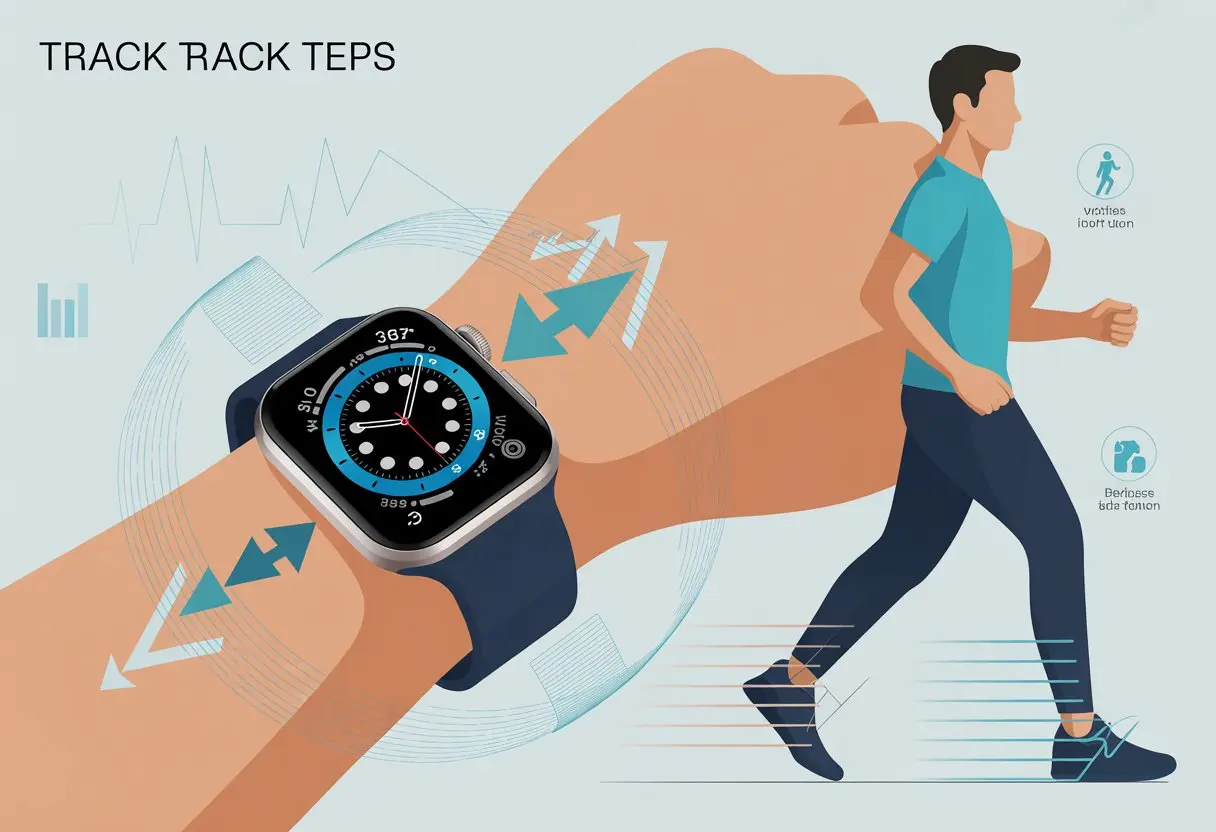
Let’s be honest, haven’t most of us wondered if our smartwatches are just stylish wrist jewelry or if they’re actually paying attention to what we do all day? Smartwatches use tiny motion sensors called accelerometers to track our movements, so they can count our steps—even when we’re not thinking about it.
It feels a bit like magic, but nope, it’s just science quietly doing its thing.
Each time we walk—or make a dramatic arm gesture—our smartwatch catches that movement. Sometimes, these step counts make us wonder if we really took the dog for an extra stroll or just fidgeted too much in line.
Let’s poke around a bit more and see what’s really happening with these wrist-worn step counters.
How Smartwatches Detect Your Steps
When we strap on a smartwatch or fitness tracker, it almost feels like magic that it knows every step we take—and sometimes, the ones we didn’t. The real secret? Sensors.
These tiny tools translate our arm swings and walking into step counts we can actually see.
The Accelerometer: The Tiny Tracker That Could
Let’s talk about the star of step counting: the accelerometer. This sensor detects movement in three directions—side to side, up and down, and forward and backward.
When we walk, our arms and wrists move in certain patterns. The accelerometer picks up those patterns by sensing changes in motion and speed.
Honestly, it’s like a mini dance judge on our wrists, quietly counting every “step” in our weirdest moves.
Our smartwatches watch for a spike in movement. When our foot hits the ground, the accelerometer senses a sudden stop and marks it as a step.
If we start flapping our arms around, it tries to ignore anything that doesn’t look like walking or running. Sometimes it gets tricked and counts a few fake steps, but it usually improves the more we move.
Sometimes fooled by wild dancing (sorry, party animals)
Gyroscope: Stabilizing Your Fitness Journey
Now, meet the gyroscope. This sensor is like the accelerometer’s reliable sidekick.
While the accelerometer tracks shakes and impacts, the gyroscope figures out if we’re twisting, turning, or just spinning in our chair.
The gyroscope helps our trackers figure out if we’re really walking or just waving our arms. This makes our step count less likely to get tricked.
The gyroscope and accelerometer work together. When both agree on what’s a real step, our totals get more accurate.
Some watches skip the gyroscope, but the fancier ones include it for extra-precise tracking. If you’re curious, check out how smartwatches combine sensors to track movement and steps.
So next time your step count looks perfect, you can thank these tiny gadgets for working together behind the scenes.
Understanding Motion Sensors
Smartwatches use special sensors that do more than just count our wrist shakes when we’re annoyed at coworkers. These gadgets always stay on, watching for real steps and ignoring our attempts to outsmart them with jazz hands.
How Sensors Pick Up Every Sashay and Skip
At the center of every trusty smartwatch is the accelerometer. This little device acts like a step detective.
It tracks movement in three directions—side to side, up and down, and forward and back.
When we walk, the accelerometer hunts for patterns in our arm swings and body movement. It only counts a “step” when those patterns match real walking.
Some smartwatches, like Fitbit, add a gyroscope to figure out if we’re spinning, jumping, or sneaking in dance moves at home.
The gyroscope adds more detail for activities that involve twisting or turning.
This combo of accelerometer and gyroscope doesn’t just count steps. It learns the difference between us wandering the supermarket and us flopping on the couch.
So, as much as we’d love to cheat the step count, our smartwatch is usually smarter than we are!
How Data Becomes Step Counts
Whenever we move, our smartwatch jumps into action, recording that movement and turning it into step counts.
The watch tries to spot brisk walks and ignore random arm waves, so we get results we can actually trust when tracking calories burned and other activity.
Algorithms: The Secret Math Wizards
Inside our smartwatches, algorithms work behind the scenes—turning our motion into step counts.
When we walk, the watch uses accelerometers to detect movement on three axes: up-down, side-to-side, and back-and-forth.
If we’re just flapping our arms, the algorithm can often tell the difference from real steps.
Here’s what happens, in simple terms:
Detects movement spikes: The watch looks for repeating patterns that look like walking or running.
Filters out noise: Sudden jerks or random hand gestures usually get ignored.
Counts steps: Every walking or running pattern adds a step to our count.
These algorithms even adjust for different speeds. If we start running, the math wizards keep up and count accurately.
They also help calculate calories burned based on our movement and activity level.
Calibrating for Accuracy: One Small Step for You, One Giant Leap for Data
Smartwatches want to get to know us, so they try to calibrate to our unique stride.
Many watches ask for our age, height, and weight. Some even ask for our regular step length—since our long legs might mean fewer, bigger steps than our neighbor.
Calibration means the algorithms use our own data to get better at counting. If our stride is 70 centimeters but the watch thinks it’s 50, we’ll end up with an inflated step count and weird calorie numbers.
Good calibration makes our step count more reliable, whether we’re walking, jogging, or dancing in the kitchen.
That means better feedback for our goals, more accurate summaries, and no awkward bragging based on phantom steps.
It’s like giving the smartwatch a cheat sheet—so it gets top marks in tracking every move.
For more on how wearables measure steps, check out this deeper dive into step detection.
Popular Brands and Their Approach to Step Tracking
Not every step counter works the same way. Different smartwatches and trackers have their own tricks, sensors, and secret sauce for tallying up our steps and judging how active (or lazy) we’ve been.
Apple Watch: Counting Steps with Style
The Apple Watch doesn’t just sit there looking good—it wants to track every dash to the fridge.
Apple uses a 3-axis accelerometer that follows all our wiggles and strides. This hardware detects movement in three directions and notes changes in speed and direction.
But there’s more—Apple pairs this with a gyroscope for even smoother step-counting, filtering out wild gestures like jazz hands or dramatic pizza grabs.
It works with software that recognizes patterns matching real walking or running, so we can’t trick it with a dance break (believe us, we’ve tried).
The steps show up in our Activity app, along with calories and even how often we stand up—perfect for anyone who loves closing those rings.
Fitbit: The Everyday Step Sleuth
Fitbit makes us feel seen—even if we’re just shuffling between the couch and fridge.
These trackers use a similar accelerometer as the Apple Watch, but Fitbit’s step detection algorithm is its secret sauce.
The software looks for movements that match typical walking and running, ignoring things like overenthusiastic TV remote waving.
We can check our steps right on the device or in the Fitbit app, where colorful charts and badges pop up when we hit our goals.
Fitbit’s long battery life keeps it tracking steps day and night, so it notices if we’re pacing at midnight.
According to Wirecutter, Fitbit’s step counts are often among the most accurate—which is comforting if we’re really counting every step.
Beyond Steps: Other Health Metrics Tracked
Smartwatches don’t just care about our steps. They’re also watching our heart rates, blood oxygen, and even whether we’re actually sleeping or just lying there, pretending.
Heart Rate: Pulses, Beats, and Drums
Let’s be honest—our hearts don’t just beat. They actually put on a show, and our smartwatches? They’re the biggest fans, right on our wrists.
You’ve probably noticed those green blinking lights under your watch. They’re not there for decoration. That’s photoplethysmography (try saying that without tripping up). The watch shines LED lights into your skin and checks for tiny changes in blood flow to count your heartbeats.
We use heart rate tracking to see how hard we’re working out. If our hearts decide to get weird—speeding up or slowing down for no reason—we’ll know pretty quickly.
Doctors often recommend watching your resting heart rate over time. It can warn us about health issues before they become a big deal.
Honestly, our wrists are busier than ever, keeping tabs on all those pulses, beats, and sometimes those pre-presentation jitters.
Blood Oxygen Levels: Breathing Easy
Blood oxygen (SpO2, if you want to sound fancy) basically tells us how much oxygen our bodies are soaking up.
Smartwatches use tech similar to heart rate tracking. They shine red and infrared LEDs through our skin, and a sensor watches for color changes—since oxygen-rich blood looks different than oxygen-poor blood.
Most watches check our oxygen while we’re asleep or just chilling, but we can usually run a test whenever we feel like it. If our oxygen drops, the watch might buzz, giving us a gentle heads-up (or a small scare).
Tracking blood oxygen is super useful if we have breathing issues, sleep apnea, or just want to see how we handle hiking up a mountain. Our wrists are kind of like amateur respiratory therapists now.
Sleep Tracking: Monitoring Zzzs, Not Just Steps
Smartwatches don’t clock out when we go to bed. Using sensors like accelerometers and heart rate monitors, they watch when we fall asleep, how much we toss around, and which sleep stage we’re in.
Suddenly, we have data showing how much of our “shut-eye” is actual sleep versus wrestling matches with our blankets.
Some watches check heart rate variability and blood oxygen while we sleep. They can help spot issues like sleep apnea.
In the morning, we get colorful charts about deep sleep, light sleep, and those mysterious REM periods. Apparently, we can now earn sleep medals—or lose them. Nothing says adulthood like your watch judging your snooze habits.
If we want to avoid becoming permanent couch decorations, step tracking helps keep us honest.
Counting steps actually matters more than most of us think, especially for long-term health issues like heart failure or high blood pressure.
Benefits for Everyday Couch Potatoes and Athletes
Some days, walking from the couch to the fridge feels like a gold-medal event. Even a little extra movement can make a difference.
That’s why step tracking works for everyone—from weekend warriors to champion loungers.
When we count our daily steps, we see how much we actually move. It can push us to sneak in a walk between TV episodes or park a little farther from the grocery store (just don’t forget where you parked).
Fitness trackers and smartwatches let us set goals, join step battles, or just brag when we finally hit 10,000 steps.
It’s not just about competition, though. Tracking steps can lift our mood and energy, and might even help with weight management.
And just to clear things up—refrigerator trips don’t count as cardio. But hey, every step counts.
By tracking steps and activity, we can notice patterns and maybe even catch early warning signs. Some smartwatches nudge us to move if we’ve been sitting too long.
If you already have certain conditions or risk factors, these little reminders could make a real difference in your health.
Hi, my name is Garrett Jones, and I am a tech enthusiast. I enjoy researching the new tech that has been released, and have a vast knowledge of the best tech to purchase.
From a young age, I have always had a big interest in technology, and this blog is an extension of that interest. Through this blog, I hope to provide others with all of the information they need regarding tech options to consider, and things such as compatibility. Some of the different items I will be discussing include headphones, smartwatches, and how to fix common issues.